
How to Verify Accuracy, Compliance, and Supply Before You Buy in Bulk
Voheal – Guangzhou Voheal Technology Co., Ltd
2026
Keywords: infrared ear thermometer manufacturer, infrared ear thermometer supplier, ear thermometer wholesale, digital ear thermometer OEM, private label ear thermometer, baby ear thermometer, medical infrared thermometer manufacturer, IR thermometer bulk order
Introduction
The word “infrared” on a thermometer box tells you how a device measures, not how well it measures. Two ear thermometers can look identical, sit in identical packaging, and quote identical one-second reading times, yet disagree on the same ear by half a degree. For an importer, a distributor, a pharmacy chain, or a private-label brand, that gap between the marketing and the measurement is where returns, complaints, and lost contracts start.
This guide argues that an infrared ear thermometer supplier should be chosen on three pillars, not on price. The first is documented measurement performance that can be traced to the international standards for clinical thermometers, applied to the exact model you intend to buy. The second is genuine regulatory conformity for the destination market – the European Union’s MDR Class IIa route for clinical thermometers, the United States FDA 510(k) clearance, and the relevant national systems in between. The third is OEM/ODM flexibility and consistent bulk supply, so that the thousandth unit you receive behaves like the sample you approved. Price still matters, but it belongs somewhere below these three, because the true cost of a thermometer that drifts in the field is measured in recalls and lost listings, not in cents per unit.
Product Highlights
- Reading time: a fast, single-second reading is offered on this model, intended to reduce wait time in routine screening.
- Three measurement modes: ear, forehead, and object (room, water, milk, food), intended for different use cases rather than interchangeable readings of one number.
- Mode switching: a magnetic front cover automatically returns the device to ear-temperature mode when removed, to reduce the risk of mixing modes by accident.
- Memory: up to 20 sets of readings are stored for review of temperature change over time.
- Beep alarm: audible signal with three bands (normal, fever warning, high temperature) per the supplied artwork; the exact bands should be confirmed against the test report and the destination market’s labelling rules.
- Display: LED digital display with switchable degC / degF and a backlight for low-light use.
- Power and shutdown: runs on 2 x AAA batteries with automatic shutdown after a short period of inactivity.
- Supply options: specifications, samples, packaging options, and bulk supply details are available on request.
Any numeric performance figure or alarm band should be confirmed against the test report and the labelling for the exact model before it is published or used in a purchasing decision.
1. How an infrared ear thermometer actually works
An infrared ear thermometer is a non-contact optical instrument that infers temperature from thermal radiation. Every object above absolute zero emits infrared energy, and the intensity of that emission at a given wavelength depends on the object’s temperature and on a property called emissivity. Human skin and the tympanic membrane – the eardrum – have an emissivity very close to that of a black body, which is why an infrared sensor pointed at them can be calibrated to read temperature accurately.
The “ear” in the product name is not decorative. The tympanic membrane is perfused by the same carotid artery that supplies the hypothalamus, the brain’s temperature-regulation centre, so its temperature tracks core body temperature more closely than the skin surface does. An ear thermometer is therefore designed to read the radiation coming from the eardrum and the walls of the ear canal, where the geometry of the probe and the optical path matter as much as the sensor itself. A poorly aimed probe that picks up radiation from the outer ear, or one that allows the canal to be cooled by draughts, will read lower than core even with a perfect sensor.
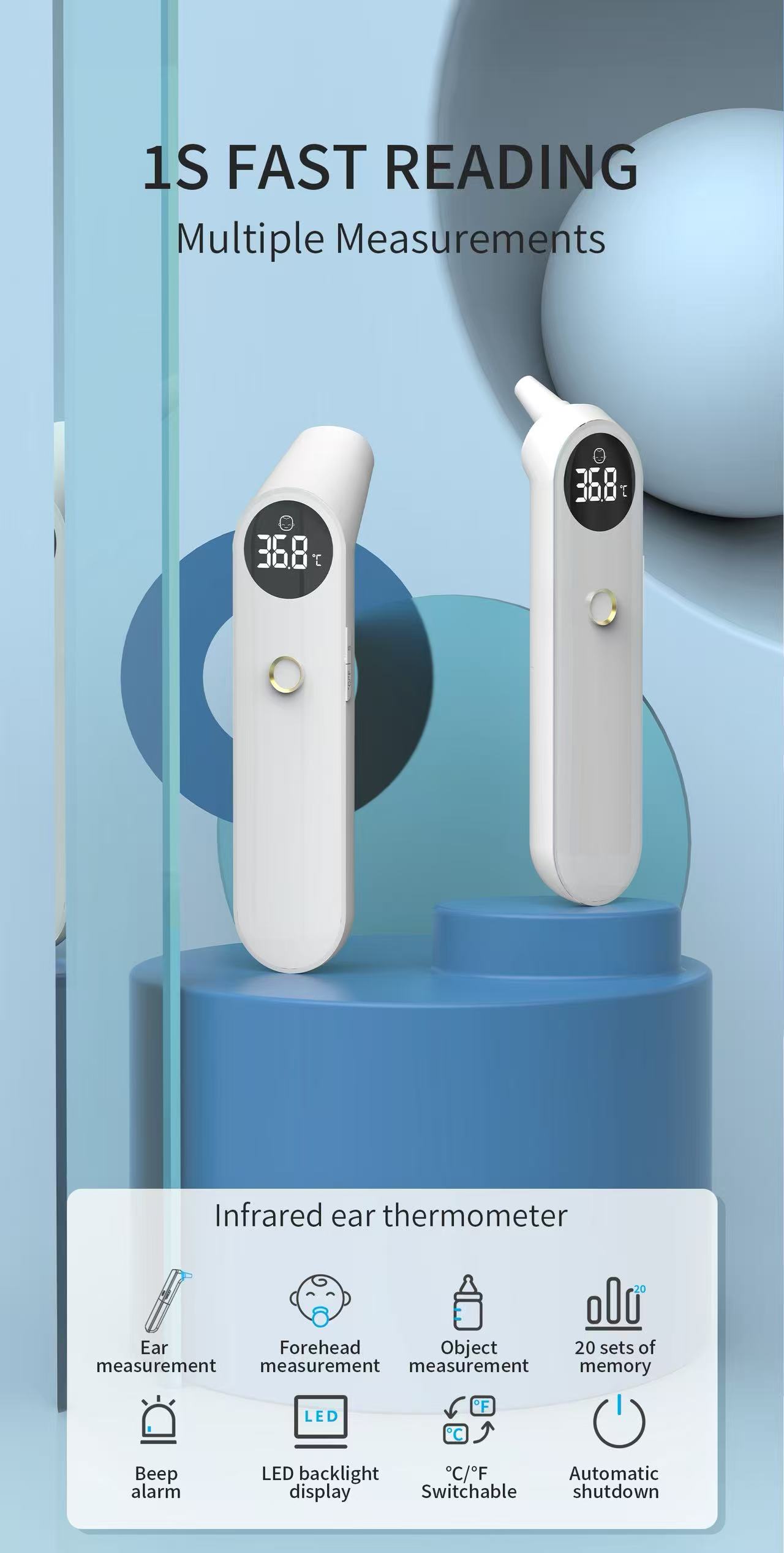
The practical lesson for buyers is that an infrared ear thermometer is a system, not just a sensor. Sensor, optics, probe geometry, calibration constants, ambient-temperature compensation, and firmware all contribute to the final reading. Two devices with the same sensor on paper can perform very differently because of how these other elements are designed and controlled. That is also why “infrared” alone is not a useful purchasing criterion.
2. Ear vs forehead vs object: three different measurements
Many infrared thermometers sold for consumer and clinical use offer three modes, and it is important to understand that they are different measurements, not the same measurement taken three ways.
In ear mode, the probe is placed at the entrance of the ear canal, with the magnetic cover removed. The reading targets the tympanic membrane and the canal wall and is, when correctly placed, the closest of the three to core body temperature. In forehead mode, the probe is held a short distance from the forehead – on this model, the artwork indicates a working distance of about 1 to 3 cm – and reads the skin surface of the forehead. Skin temperature is influenced by ambient air, by perspiration, and by recent contact (a cool pillow, a warm hat), so a forehead reading is more variable and is not a substitute for an ear reading when an ear reading is feasible.
Object mode is for non-medical surfaces and liquids: bath water, baby bottles, room air, food. It does not correct for the difference between skin and surface emissivity, and it is not intended to estimate body temperature. Using object mode to read a baby’s bottle is appropriate; using object mode to read a sleeping baby’s skin is a category error, and a good supplier’s user instructions will state this clearly.
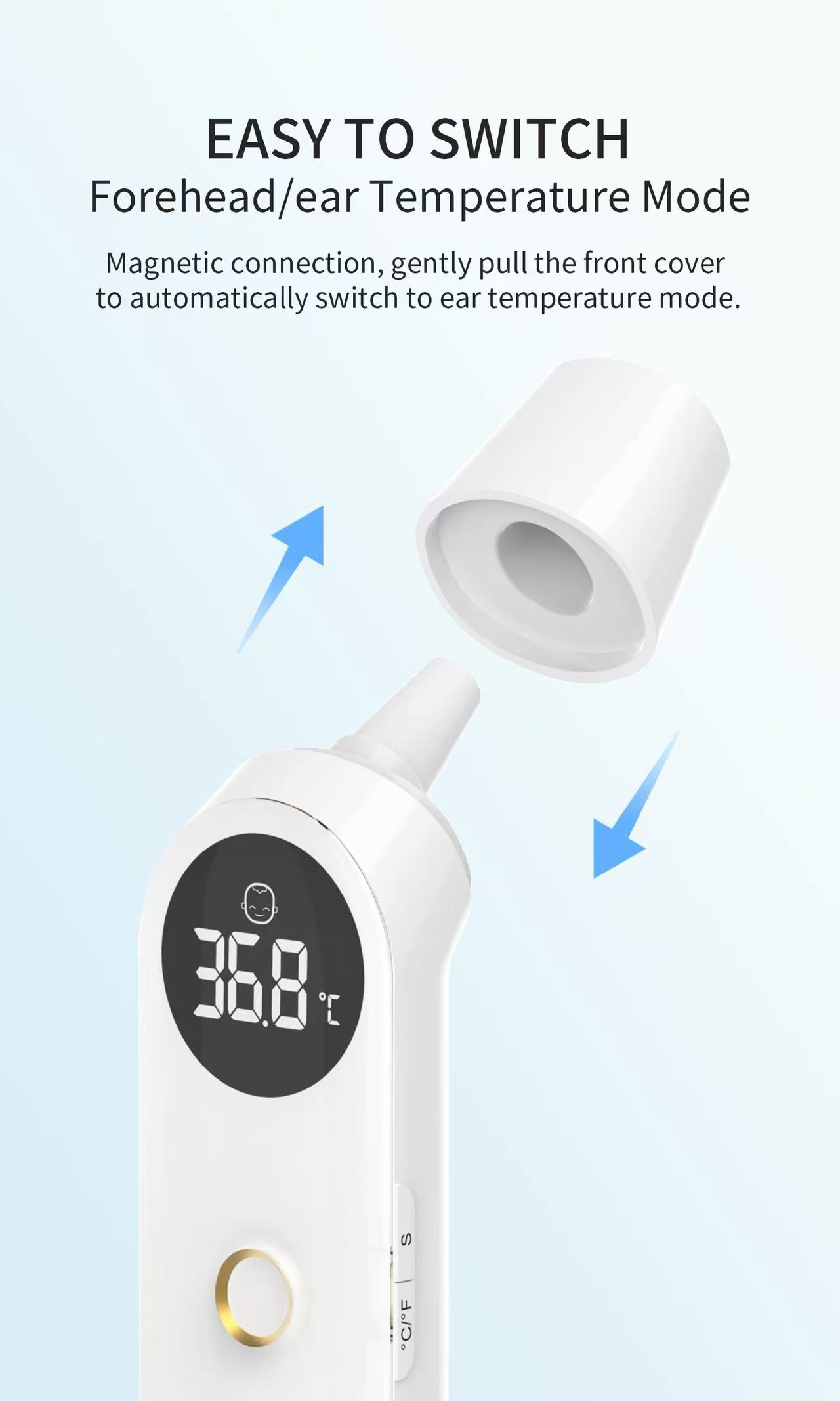
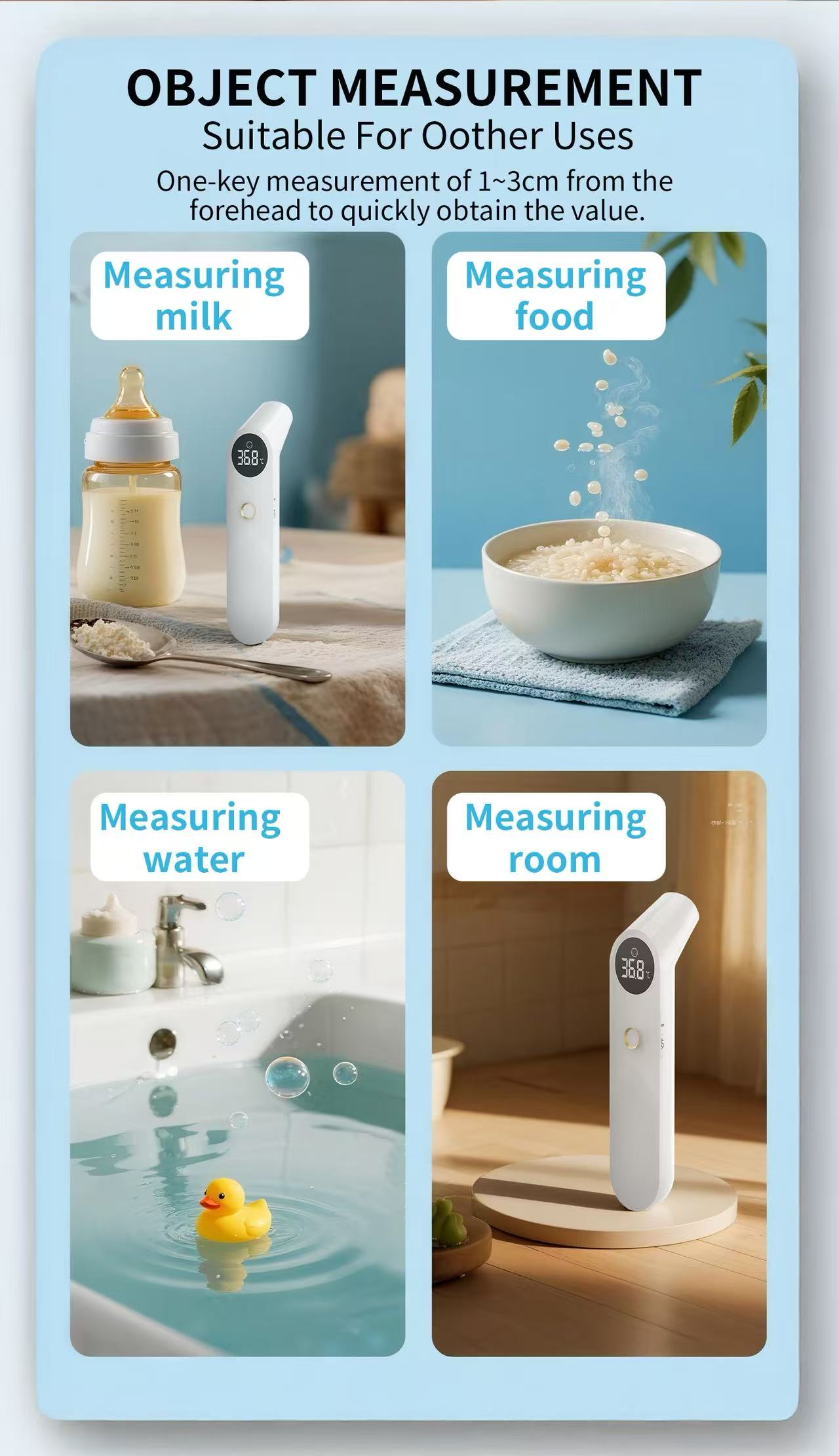
Buyers sourcing for retail should make sure that the labelling and instructions for the destination market are explicit about which mode is which. A model that quietly encourages forehead use for adult screening is a different product from one whose instructions make ear the default and treat forehead as a fallback. Both can be valid; they should not be presented as the same thing.
3. Why the ear canal gives a stable reading
Skin temperature is variable because skin is exposed to the air. The ear canal, past the tragus, is a closed cavity protected from draughts and from rapid ambient change. That is the single most important reason an ear reading is more stable than a forehead reading in normal use, and it is the reason clinical-grade infrared thermometers were originally designed around the ear rather than the skin.
The geometry still has to be right. A probe that is too small for the canal will not seal; a probe that is too large will cause discomfort and may not reach the canal. The probe should be aimed at the opposite temple, gently seating at the canal entrance, and held steady until the device signals completion. With a sleeping child, this is more reliable than a forehead swipe because the position is enforced by the anatomy rather than by hand-eye coordination.
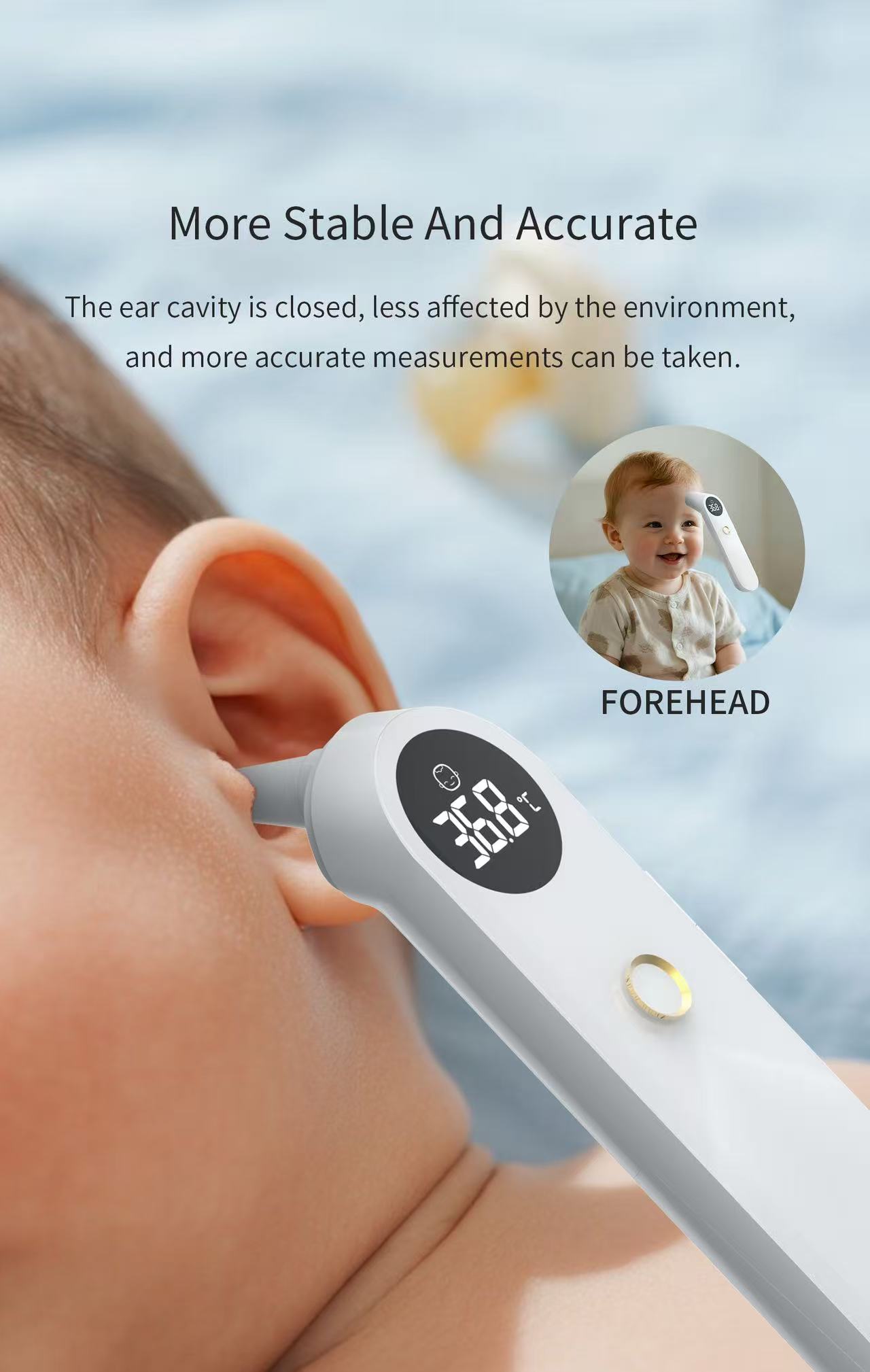
Buyers evaluating a model should ask whether the probe geometry is appropriate for the intended population – adult, paediatric, or both – and whether the device ships with a size or geometry that suits the target market. A single one-size-fits-all probe is not necessarily wrong, but it is a design decision, and the documentation should explain how that decision was tested.
4. Accuracy, calibration, and what a single number really means
Headline accuracy claims – “plus or minus 0.2 degC” or similar – are a starting point, not a conclusion. The standards that govern clinical thermometers split the question into parts: how closely the device reads a stable black-body source under controlled conditions (lab bias), how consistently it repeats the same reading on the same target (repeatability), and how it performs against a reference method on real subjects (clinical agreement). All three matter, and they are evaluated in different ways.
ISO 80601-2-56:2017 and its Amendment 1 are the international particular requirements for clinical thermometers for body temperature measurement. ASTM E1965 covers infrared thermometers for intermittent determination of patient temperature. Both standards describe how a model should be tested in the lab and how the user instructions should disclose performance. A model whose documentation quotes only a single number, with no reference to the standard and no breakdown of bias, repeatability, and clinical agreement, is a model whose performance is not fully characterised in writing.
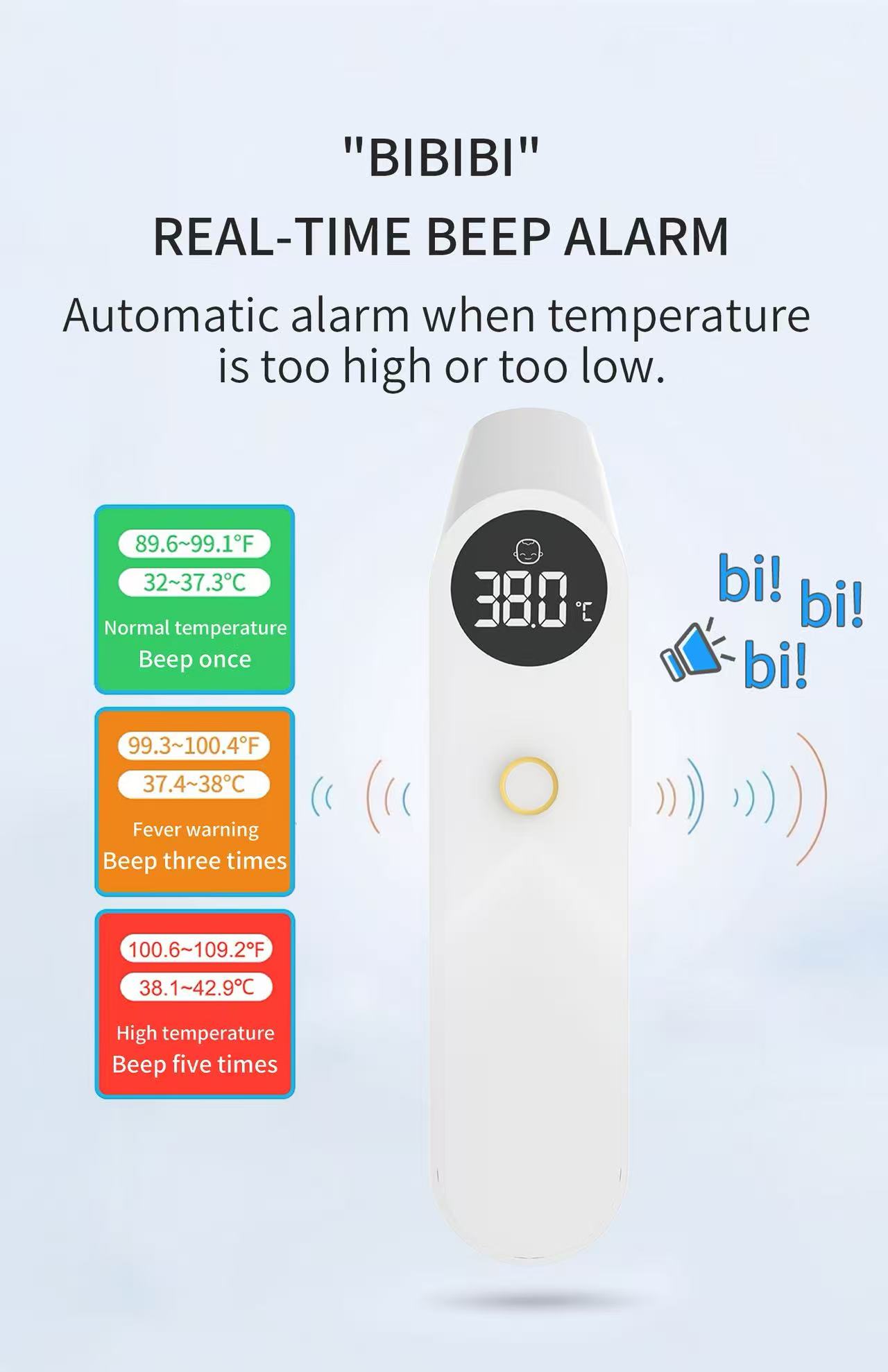
The alarm bands deserve particular care. The artwork supplied with this model indicates three bands, with distinct beep counts for normal, fever warning, and high temperature. The numbers printed on the artwork are the product’s alarm settings; they are not a clinical definition of “fever”, which is a medical judgement that depends on age, site, and clinical context. A responsible product presents these as device-side thresholds for signalling, not as a diagnosis, and the user instructions should say so. If a destination market requires a different threshold for clinical signalling – some do – the labelling and the firmware should be reviewed against that market’s rules before shipping.
Buyers should treat any single-number accuracy claim as a prompt to ask for the underlying test report, not as a substitute for it.
5. Memory, alarm thresholds, and usability features
Once basic measurement is established, usability features determine whether a device is used correctly in the field. Memory and alarm functions are the most visible, and on this model they are designed for routine home or workplace screening rather than for clinical charting.
The device stores up to 20 sets of readings, which is enough to track a child’s temperature over a day or two without writing anything down. The beep alarm gives immediate audible feedback, which is useful when the user is the parent being measured, not the operator, but it can be a problem in shared spaces where the alarm is intrusive. Buyers for hospital or clinic channels often ask for a silent mode or a quieter default; buyers for retail generally prefer the alarm to be on by default.
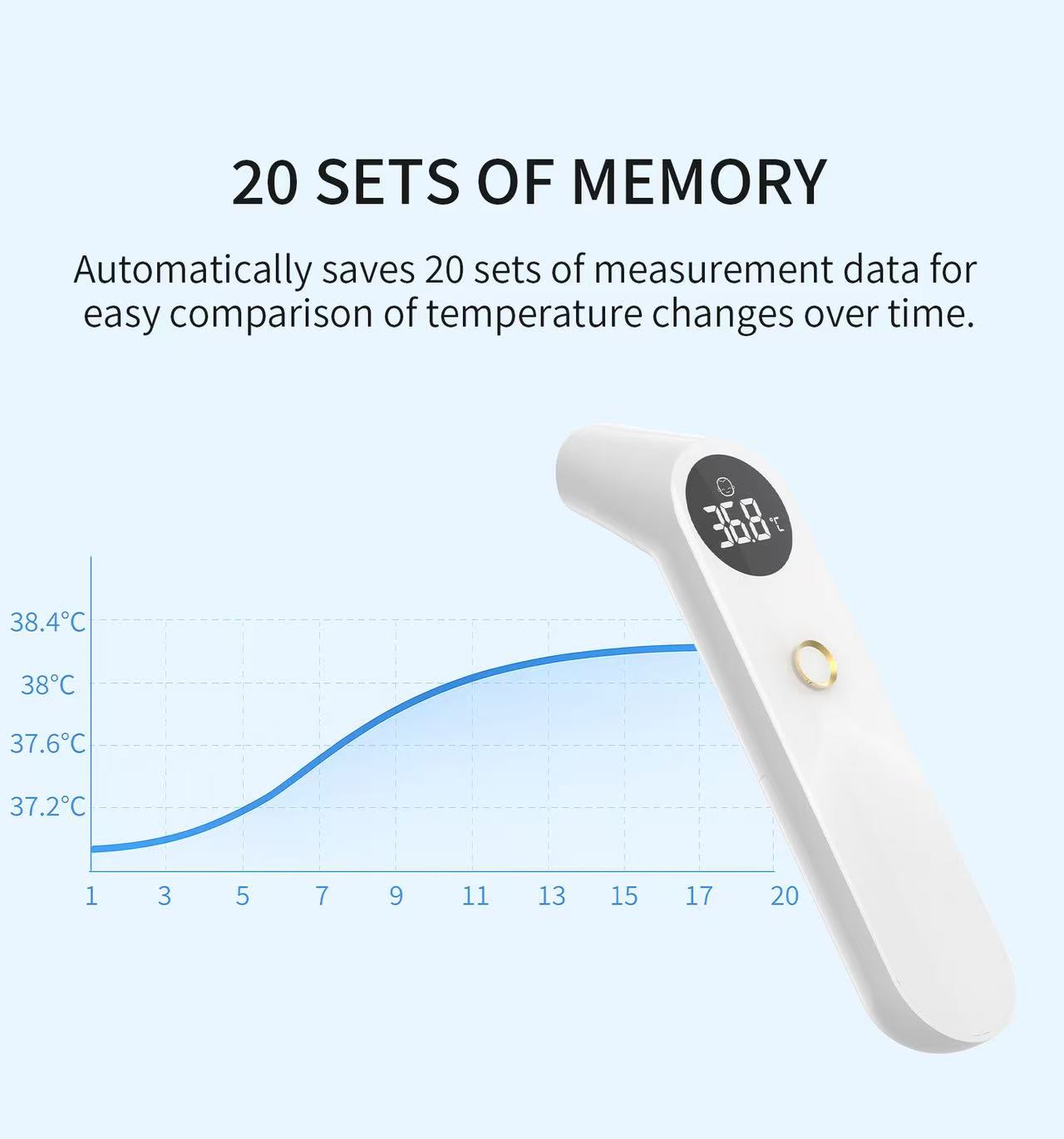
degC / degF switching, an LED backlight for low-light use, and automatic shutdown are quality-of-life features that affect how the device is perceived. They do not by themselves indicate measurement quality, and a buyer who weighs a supplier on whether the backlight is white or coloured rather than on the underlying test report is solving the wrong problem. Treat these as table-stakes features, verify they work, and move on to the substantive question of measurement.
6. Specifications, batteries, and disposables
Specifications are where the engineering meets the buyer’s spreadsheet. For an infrared ear thermometer, the parameters that matter are the measurement range, the display resolution, the working distance, the power source, the dimensions, and the packaging configuration.
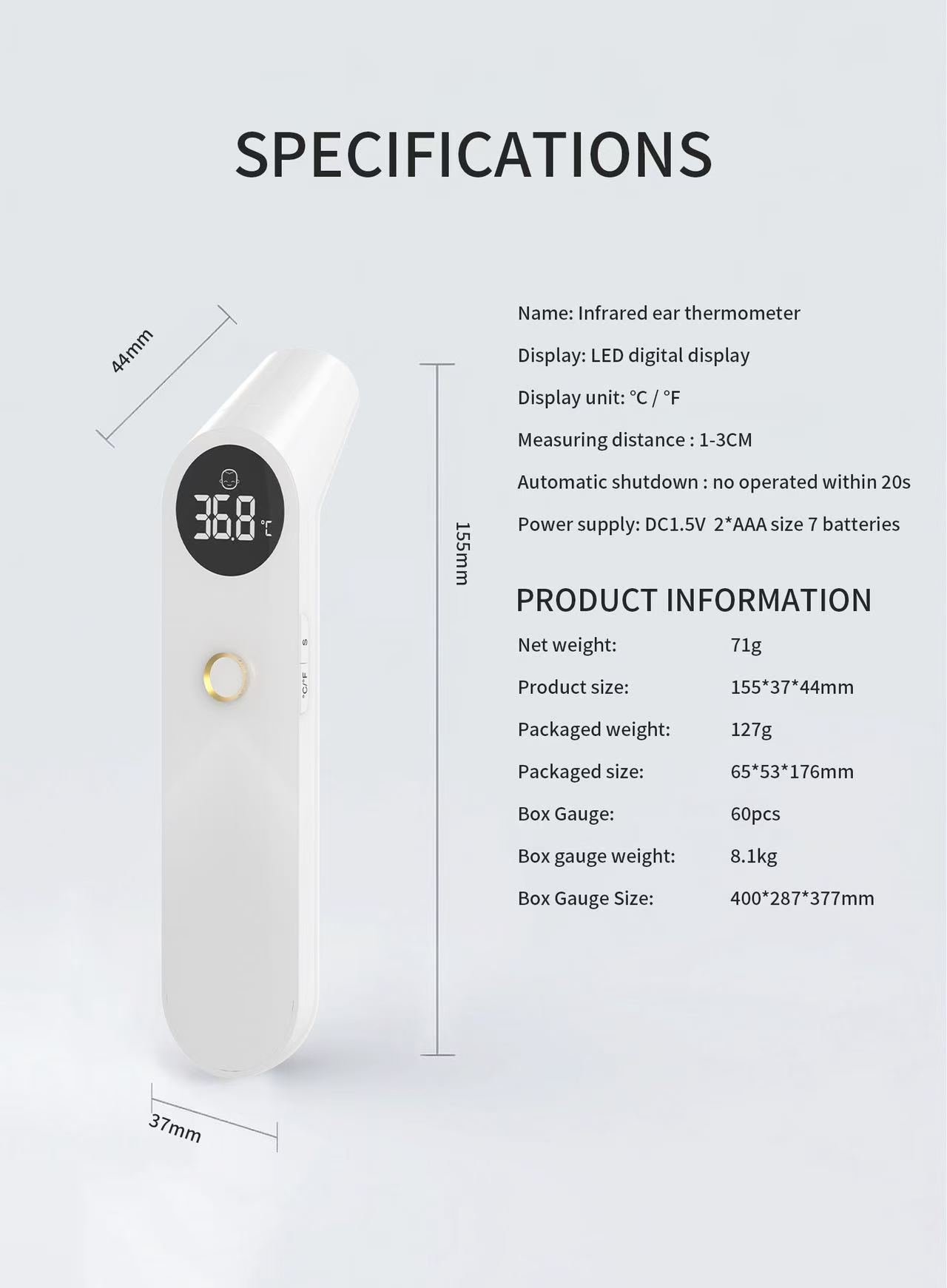
The artwork supplied with this model lists a measurement working distance of 1 to 3 cm, a degC / degF switchable display, automatic shutdown after no operation within 20 seconds, and power from 2 x AAA batteries supplying DC 1.5 V. The product’s net weight, packaged weight, and outer-carton configuration are also shown. Two practical points follow.
First, the power-supply line on the artwork reads as “DC 1.5 V, 2 x AAA size 7 batteries” in its current form. In the original product context, “size 7” is a translation artifact – the “7” battery size is the Chinese consumer designation for AAA – so the intended meaning is “2 x AAA batteries supplying 1.5 V each”. The artwork should be cleaned up before publication so that the labelling is unambiguous to international buyers. Second, the inclusion or exclusion of batteries in the retail box is a commercial decision that varies by market and by distributor; the buyer should confirm this in writing, because shipping lithium-class cells by air has regulatory consequences that differ from shipping alkaline cells, and “batteries included” is a line item that affects the customs declaration.
For any specific numeric specification – measurement range, display resolution, lab bias, repeatability, clinical agreement – the buyer should request the test report and the model-specific specification sheet, and treat the supplied artwork as a starting point for verification rather than as the final answer.
7. Regulatory pathways: ISO 80601-2-56, ASTM E1965, CE MDR, FDA
An infrared ear thermometer is a medical device, not a consumer gadget. The destination market determines which regulatory pathway the product must follow, and a responsible supplier will be transparent about which markets the model is approved for.
In the European Union, clinical thermometers are medical devices classified as Class IIa under Regulation (EU) 2017/745, the Medical Device Regulation (MDR). Class IIa requires the involvement of a notified body for the conformity assessment, and the technical documentation must demonstrate compliance with the relevant harmonised standards, including IEC 60601-1 for general electrical safety, IEC 60601-1-2 for electromagnetic compatibility, and ISO 80601-2-56 for clinical thermometer performance. The product must carry the CE marking accompanied by the identification number of the notified body, and the manufacturer must operate a quality management system – usually ISO 13485 – covering design, production, and post-market surveillance. The EU Declaration of Conformity and the technical file should be available to the buyer on request.
In the United States, clinical electronic thermometers fall under FDA regulation 21 CFR 880.2900, product code FLL, Class II. The typical pathway is a 510(k) premarket notification demonstrating substantial equivalence to a predicate device, with performance data per ASTM E1965 or equivalent, electrical safety testing per IEC 60601-1, and electromagnetic compatibility testing per IEC 60601-1-2. The 510(k) summary should be available to the buyer.
Other markets have their own systems. The United Kingdom requires UKCA marking for the GB market and accepts CE-marked products under transitional arrangements. Health Canada licenses medical devices through the Medical Device Licence process. Australia’s TGA regulates clinical thermometers as medical devices, with the relevant inclusion in the Australian Register of Therapeutic Goods. Buyers should confirm the exact destination market and ask for the corresponding approvals before committing to a listing.
8. The documentation trail buyers should request
Because so much of a clinical thermometer’s value is invisible, the paperwork is part of the product. A reliable supplier can assemble a documentation trail before the first order rather than after a complaint, and that trail is the fastest way to compare suppliers who otherwise look identical.
At minimum, expect the test report for the exact model, naming the standard (ISO 80601-2-56 and/or ASTM E1965) and covering lab bias, repeatability, and clinical agreement as appropriate; the electrical safety test report per IEC 60601-1; the electromagnetic compatibility test report per IEC 60601-1-2; the regulatory documentation for the destination market (EU Declaration of Conformity, 510(k) clearance letter, UKCA, Health Canada MDL, TGA ARTG, as applicable); the labelling and Instructions for Use; the bill of materials for the exact configuration being supplied; and an ISO 13485 certificate for the manufacturing site. Ask specifically whether the certificate covers the current production configuration, since a certificate for an earlier version of the product does not automatically cover a redesign.
Then close the loop with a sample. The sample should match the documented model, and the production units should match the sample. Buyers who compare the approved sample against the first commercial shipment – in build, accessories, packaging, and labelling – catch more problems than buyers who trust a certificate alone.
9. OEM/ODM and private label
For distributors and brands that want their own identity on the shelf, OEM and private-label capability is the difference between reselling a commodity and building an owned product line. The scope of customisation is where suppliers separate, and it is worth testing that scope early rather than discovering its limits after a launch.
Typical private-label work covers logo printing on the device and the retail packaging, custom artwork and retail cartons, colour options for the housing, language versions of the user instructions, and accessory choices (probe covers, batteries, storage pouch). ODM work goes further, into adjustments of the product itself, and is best supported by a manufacturer that controls its own tooling and production rather than reselling another factory’s output.
Two questions reveal a great deal about a supplier’s real capability. The first is artwork control: how is your logo approved and locked, and how is a misprint prevented from reaching the whole production run? The second is change control: what happens to your approval when the supplier changes a component, a colour, or a sub-supplier? A capable partner welcomes these questions, because the answers are what keep a branded order consistent from the first shipment to the tenth.
10. MOQ, pricing, packaging and logistics
Minimum order quantities, packaging, and logistics are where a supplier’s capabilities become concrete. A low MOQ is convenient, but if it comes with a different production line, a different accessory bundle, or relaxed quality control, the saving is illusory. Try to understand what the MOQ corresponds to – a full production batch, a tooling run, or a shared order – and the answer will tell you how stable the specification will be.
Packaging is where compliance and commerce meet. The retail packaging must carry the marking that the destination market requires, including the regulatory marks (CE, UKCA, FDA clearance reference, etc.) and the labelling content that the user instructions rely on. The carton configuration affects both unit price and freight: a 60-piece outer carton, a 127-gram retail box, and a 155 x 37 x 44 mm product footprint all feed into the landed cost. Buyers who compare unit price without comparing packaging are comparing different products.
On the logistics side, the question of whether batteries are included and what type they are affects air-freight declarations. A model shipped without batteries is simpler to ship internationally; a model shipped with alkaline AAA cells is straightforward; a model with lithium cells requires the corresponding dangerous-goods compliance. Confirm this in writing before you commit to a shipping plan.
Common pitfalls buyers should avoid
- Buying on price before comparing specifications. The lowest quote almost always corresponds to a different accessory bundle, a different packaging configuration, or a different market approval, and the comparison is not like for like.
- Trusting a single accuracy number without its source. A plus-or-minus figure without a named standard, a test report, and a model is a slogan, not a specification.
- Treating forehead and ear as interchangeable. They are different measurements with different intended uses, and the user instructions should make this clear.
- Using object mode on people. Object mode is for surfaces and liquids, not for estimating body temperature.
- Presenting alarm bands as a clinical “fever” definition. The numbers on the device are alarm settings, not a medical diagnosis.
- Skipping the sample-to-production check. The sample proves intent; only the production audit and the first commercial shipment prove consistency.
- Assuming a CE marking or a 510(k) clearance transfers to every market. They do not. The destination market’s rules apply.
Conclusion
An infrared ear thermometer is a medical device sold into a competitive market, and the suppliers worth partnering with are the ones who can show the test report for the exact model, explain the difference between ear, forehead, and object measurement, understand which regulatory route your destination market requires, and demonstrate that production units match the approved sample. Everything else, including the price, is easier to negotiate once those three pillars are in place.
B2B buyers evaluating an infrared ear thermometer programme are welcome to contact us with their destination market, intended application, preferred configuration, and estimated volume. We can share model specifications, available test documentation, packaging and private-label options, and sample arrangements, so that the decision is made on evidence rather than on a label.
Frequently Asked Questions
Is an infrared ear thermometer accurate for adults and children?
When correctly placed, an infrared ear thermometer can give a reading that tracks core body temperature closely. The relevant performance characteristics – lab bias, repeatability, and clinical agreement against a reference method – should be confirmed against the test report for the exact model and against the destination market’s clinical-thermometer standard.
Are ear, forehead, and object modes interchangeable?
No. Ear mode is intended to read the tympanic membrane; forehead mode is intended to read skin surface temperature at a short working distance; object mode is intended for non-clinical surfaces such as water, milk, or room air. The user instructions should make these intended uses clear, and a good supplier will not describe them as the same measurement.
How close to the body should the thermometer be in forehead mode?
For this model, the artwork indicates a working distance of about 1 to 3 cm from the forehead. The exact working distance, the alignment to the centre of the forehead, and the effect of perspiration or recent contact are matters of user technique, and the user instructions should describe them.
What do the alarm beep bands mean?
The artwork supplied with this model shows three alarm bands with distinct beep counts for normal, fever warning, and high temperature. These are the device’s alarm settings, not a clinical definition of fever, which is a medical judgement that depends on age, site, and clinical context. Confirm the exact bands against the test report and the destination market’s labelling rules.
How long do batteries last, and what type are used?
The artwork indicates 2 x AAA batteries supplying 1.5 V each, with automatic shutdown after no operation within 20 seconds. Battery life in real use depends on backlight use, alarm use, and how often the device is switched on. Buyers should confirm whether batteries are included in the retail box and the exact cell chemistry, because this affects international air-freight declarations.
How should a thermometer be cleaned between uses?
Cleaning instructions are part of the labelling and the Instructions for Use, and they should be followed. For ear thermometers, the probe cover (if used) is typically single-use; the probe itself is typically wiped with a manufacturer-approved disinfectant. Do not immerse the device or use abrasive cleaners, and confirm the cleaning method against the IFU for the exact model.
Where can I find a reliable infrared ear thermometer supplier?
Request the model’s test report, the regulatory documentation for the destination market, the Instructions for Use, and a sample of the exact configuration you intend to buy, and compare the delivered product against the documented specification before placing a larger order. A supplier who can provide all of these is easier to trust than one who cannot.