
How to Verify Output Performance, Compliance, and Supply Before You Buy in Bulk
Voheal – Guangzhou Voheal Technology Co., Ltd
2026
Keywords: oxygen concentrator manufacturer, oxygen concentrator wholesale, oxygen concentrator supplier, 5L oxygen concentrator OEM, 10L oxygen concentrator factory, medical oxygen concentrator wholesale, PSA oxygen concentrator bulk order, private label oxygen concentrator
Introduction
A “5-litre” or “10-litre” rating on the side of an oxygen concentrator box is one of the most quoted and least understood numbers in medical equipment. Two concentrators with identical 5-litre labels can sit in identical plastic shells, share the same flow-meter dial, and yet deliver different oxygen purity to the patient at the same flow setting. For an importer, a hospital-procurement officer, a home-health distributor, or a private-label brand, the gap between the rated flow and the actual performance is where returns, complaints, regulator findings, and lost contracts begin.
This guide argues that an oxygen concentrator supplier should be chosen on three pillars, not on the per-unit quote. The first is documented output performance – oxygen purity, flow accuracy, alarm coverage, and sieve-bed lifetime – that can be traced to testing under ISO 80601-2-69 on the exact model. The second is genuine regulatory conformity for the destination market: the European Union’s MDR Class IIa route, the United States FDA 510(k) pathway under 21 CFR 868.5440, the UKCA, and the corresponding national systems, all of which shape what can be claimed and where the device can be sold. The third is OEM/ODM flexibility and consistent bulk supply, so that the hundredth unit matches the sample you approved and the certifications cover the actual configuration you ship. Price still matters, but it belongs somewhere below these three, because the true cost of a concentrator that underperforms is measured in field failures and damaged tenders, not in dollars per device.
Product Highlights
- Output options: 0.5 to 5 LPM and 0.5 to 8 / 0.5 to 10 LPM models, intended for home, clinical, and higher-flow therapy applications.
- Output purity: 93% +/- 3% oxygen concentration, the pharmacopoeial standard for medical oxygen produced by concentrators.
- Operating principle: pressure-swing adsorption (PSA) through a synthetic zeolite sieve bed, with a compressor-driven cycle.
- Standard alarms: low oxygen purity, high / low pressure, compressor failure, and power failure, with audible and visual indicators.
- Optional functions: integrated nebulizer, oxygen purity display, oxygen-concentration alarm, compressor fault alarm, double-flow outlet on the higher-platform models.
- Humidification: a built-in humidifier bottle port to support patient comfort during long sessions.
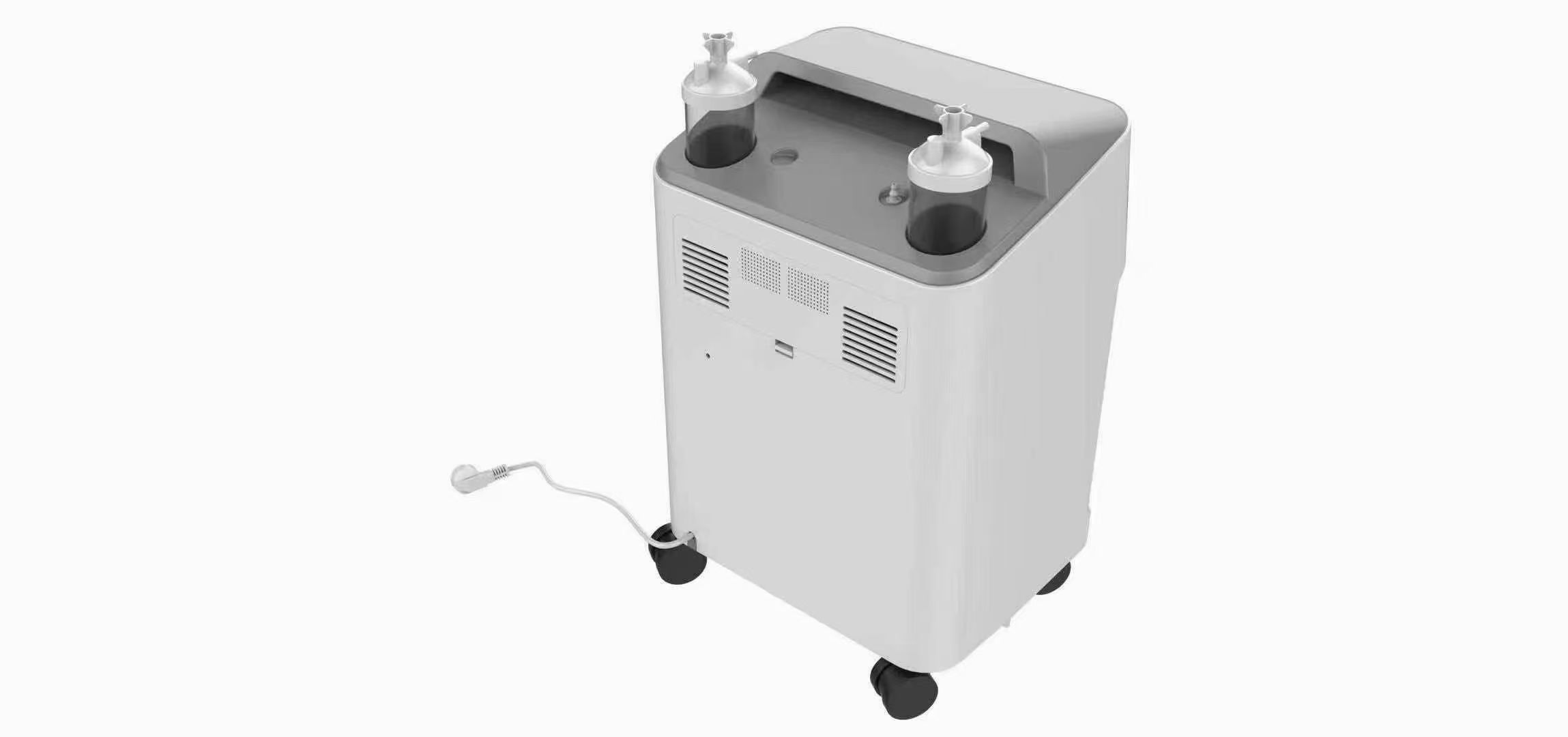
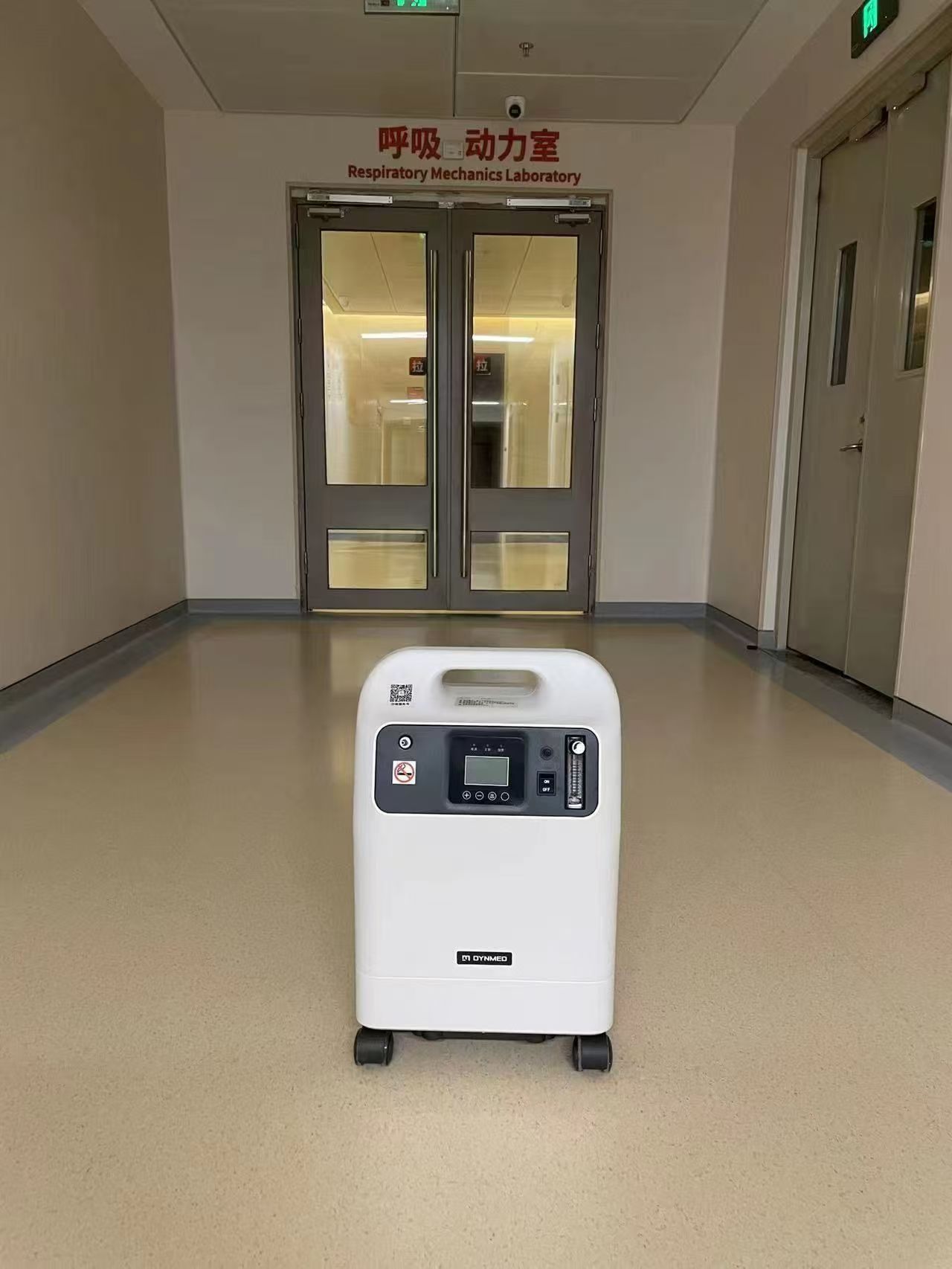
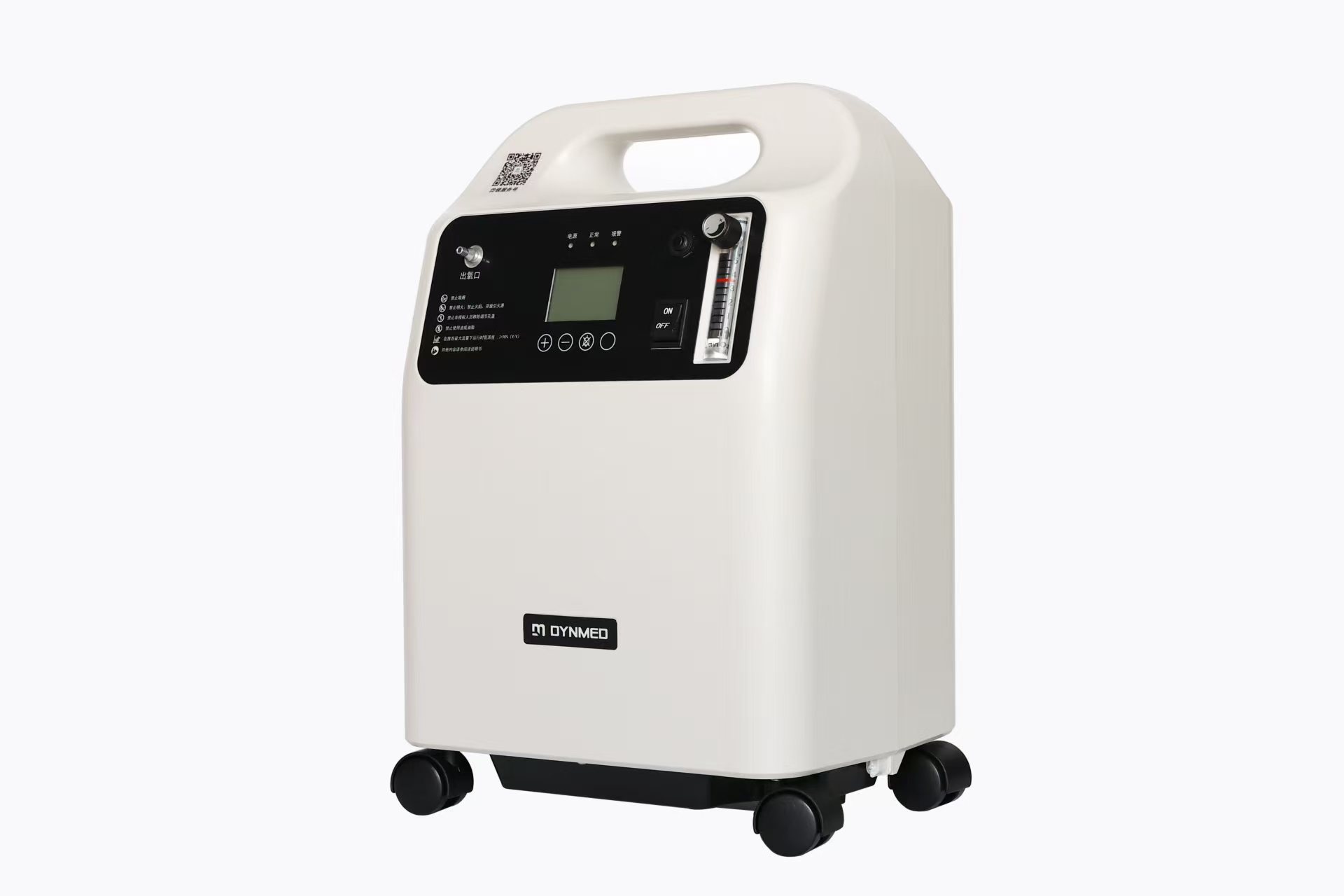
- Mobility: castor wheels and a top handle for room-to-room movement; net weight between about 14 kg (5L) and 25 kg (10L) per the supplied artwork.
- Power: AC 220 V +/- 22 V at 50 Hz or AC 110 V +/- 10 V at 60 Hz, with the higher platform also offered at 230 V / 115 V variants.
- Equipment classification: Class II, Type BF applied parts (per the artwork), and Class II Type B on the higher-platform models.
- Supply options: model specifications, test documentation, packaging, accessories, and bulk supply are available on request.
Any specific performance figure, alarm threshold, or sieve lifetime should be confirmed against the test report and the labelling for the exact model before it is published or used in a purchasing decision.
1. How an oxygen concentrator actually works
An oxygen concentrator does not store oxygen. It makes it, on demand, from ordinary room air. The cycle behind that “making” is pressure-swing adsorption, or PSA. Room air is drawn in through an inlet filter, compressed by a small reciprocating compressor, and pushed into a vessel filled with a synthetic zeolite material – the sieve bed. Under pressure, the zeolite preferentially adsorbs nitrogen and lets oxygen pass through. A second vessel is being regenerated at the same time by venting its bed to atmospheric pressure, releasing the trapped nitrogen and preparing for the next half-cycle. The two beds switch back and forth, producing a continuous flow of enriched oxygen at the outlet.
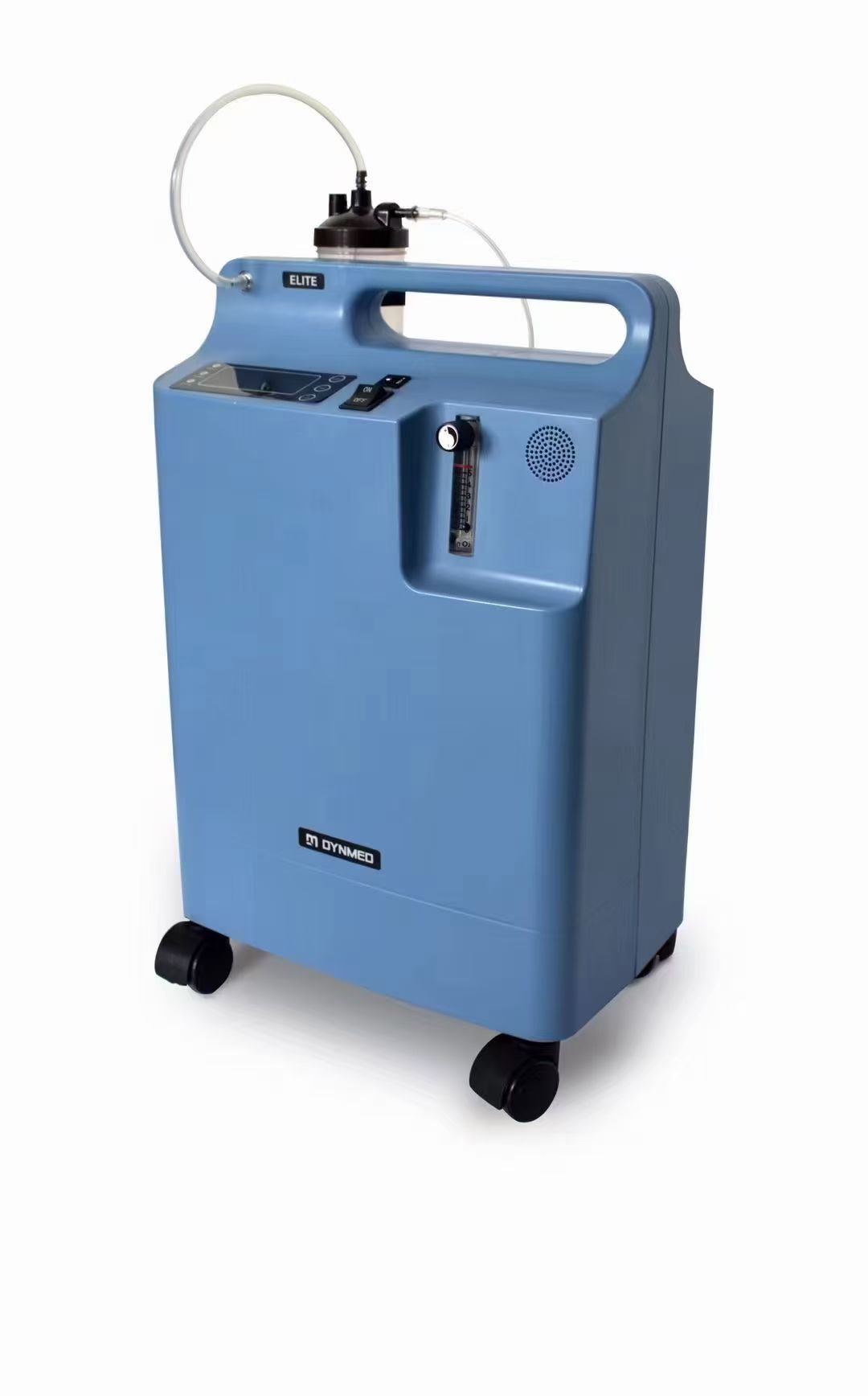
The size of the sieve bed, the cycle timing, the flow setting, and the compressor’s pressure swing all determine the trade between flow and purity. A device that comfortably delivers 93% +/- 3% oxygen at 1 LPM will deliver lower purity if the user dials up to 5 LPM, unless the manufacturer has over-sized the sieve and the compressor to maintain purity across the full range. The relationship between flow setting and purity is the first engineering question a buyer should put to a supplier: at what flow settings does the device still meet 93% +/- 3%? A test report should answer that in numbers, not in marketing.
2. Reading the spec sheet: flow, purity, pressure
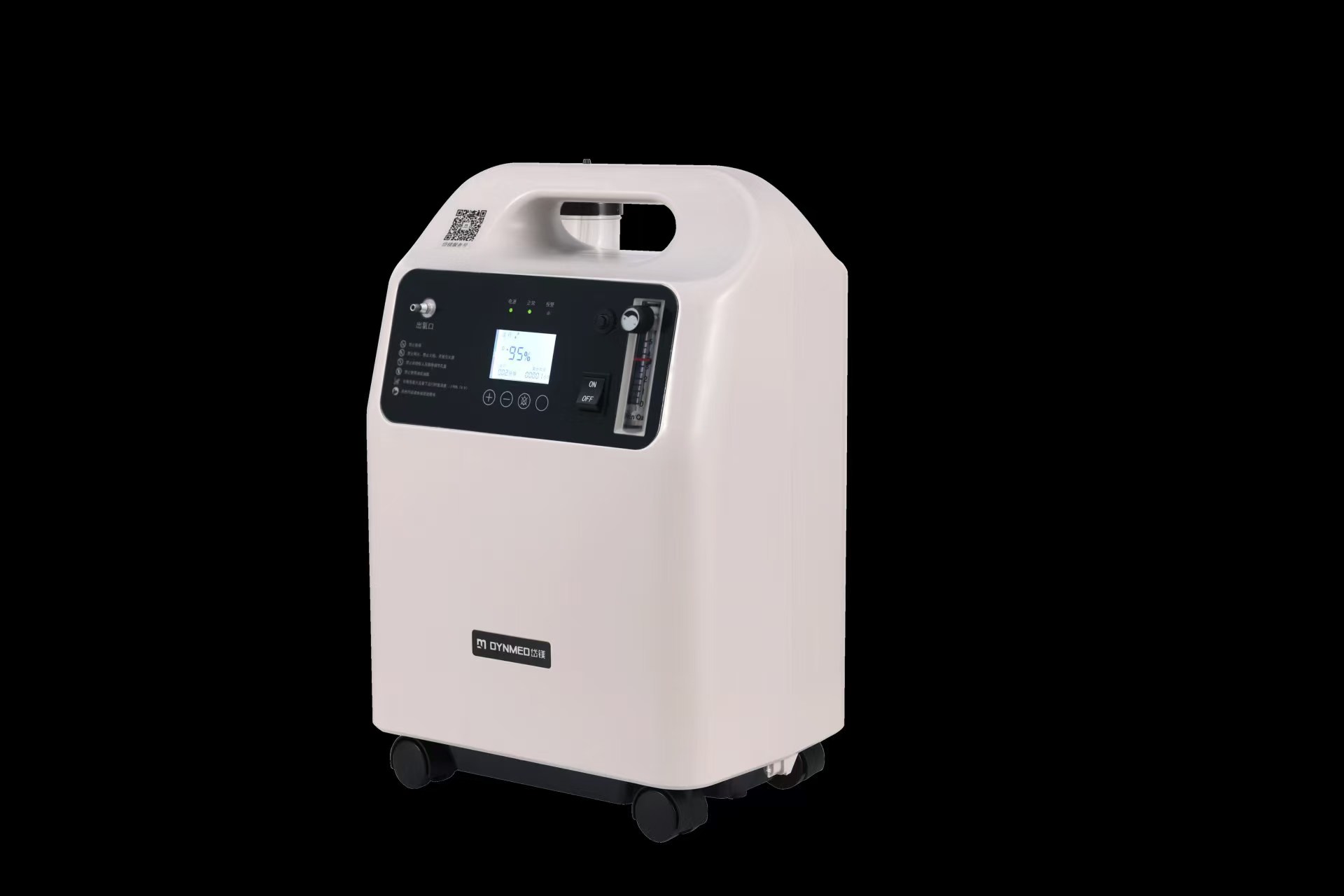
The data a B2B buyer should look at first lives in the spec table. The supplied artwork for this 5L platform lists oxygen flow at 0.5-5 LPM, output purity at 93% +/- 3%, output pressure at 0.05-0.07 MPa, a pressure relief valve set at 40 psi +/- 5 psi (276 kPa +/- 34.5 kPa), and power consumption below 300 W (or below 320 W on the alternative housing shown in the second spec sheet). Noise is below 40 dB(A) on the quieter housing and below 45 dB(A) on the alternative, with operation between 5 degC and 40 degC and at altitudes up to 2000 m (6561 ft). The device is classified Class II, Type BF under IEC 60601-1, runs on AC 220 V at 50 Hz or AC 110 V at 60 Hz, and weighs about 14 kg net.
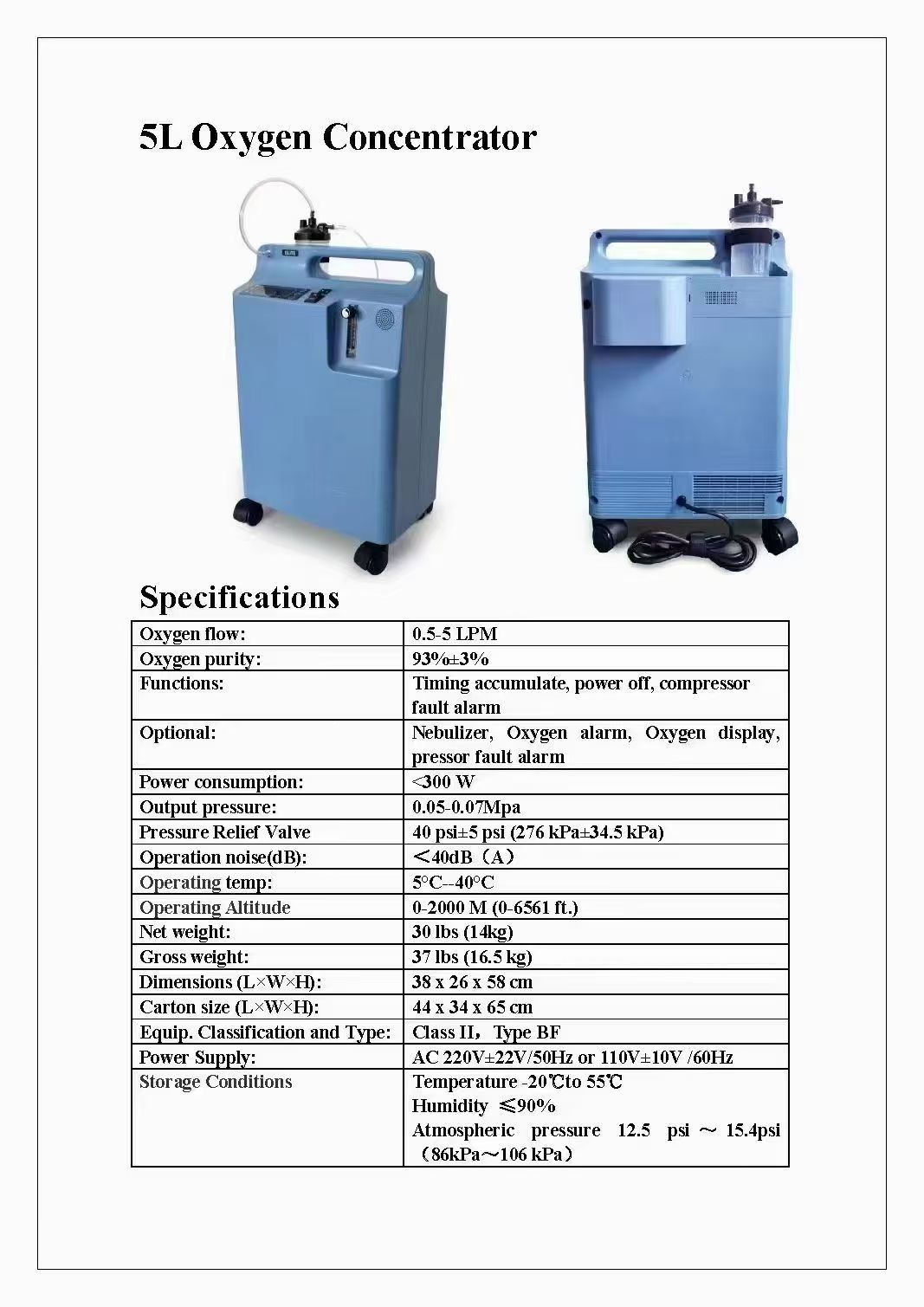
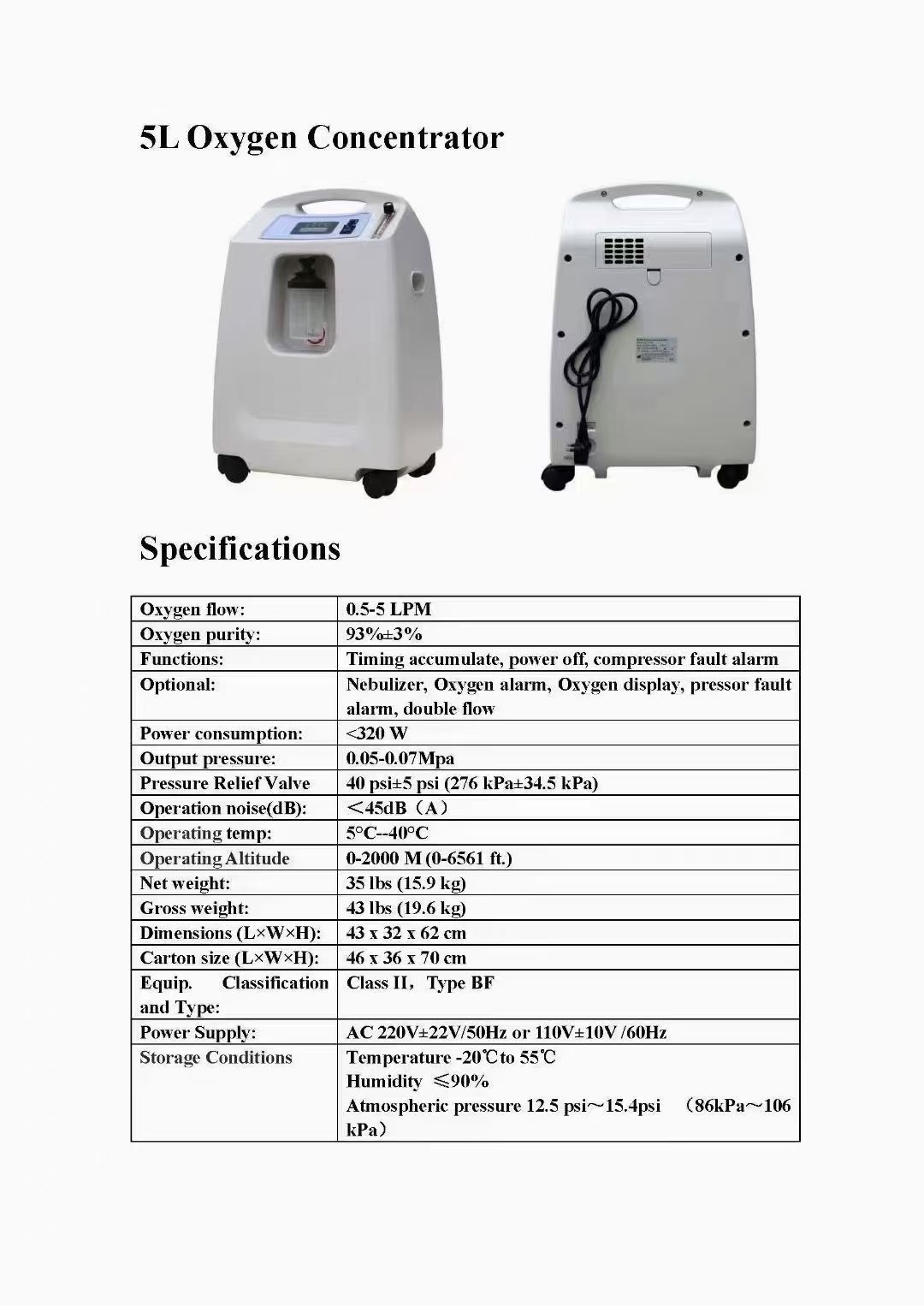
Two practical points follow. First, output pressure matters because the patient circuit – cannula, mask, humidifier bottle – is a small pneumatic system, and the device must hold its rated pressure across the full flow range. A pressure-relief valve at 40 psi protects downstream components if the patient circuit is blocked; the rating of that valve is a safety question, not a marketing point. Second, the equipment-classification line (“Class II, Type BF”) is the IEC 60601-1 designation that determines what safety and EMC testing the device has been through, and it should match the destination market’s expectations. “Type BF” means the applied parts (the patient circuit, including the cannula and mask) have an increased degree of protection against electric shock; this is a different line item from the device’s regulatory class under MDR or FDA.
3. Altitude, ambient temperature, and the limits of the LPM rating
Two environmental variables quietly decide whether a concentrator actually meets its rated purity on a given day: altitude and ambient temperature. The 5L models shown in the supplied artwork are rated for operation at 0-2000 m above sea level (0-6561 ft) and at 5-40 degC. Inside that envelope, the sieve and the compressor are sized to deliver the rated purity at the rated flow. Outside that envelope, performance drops.
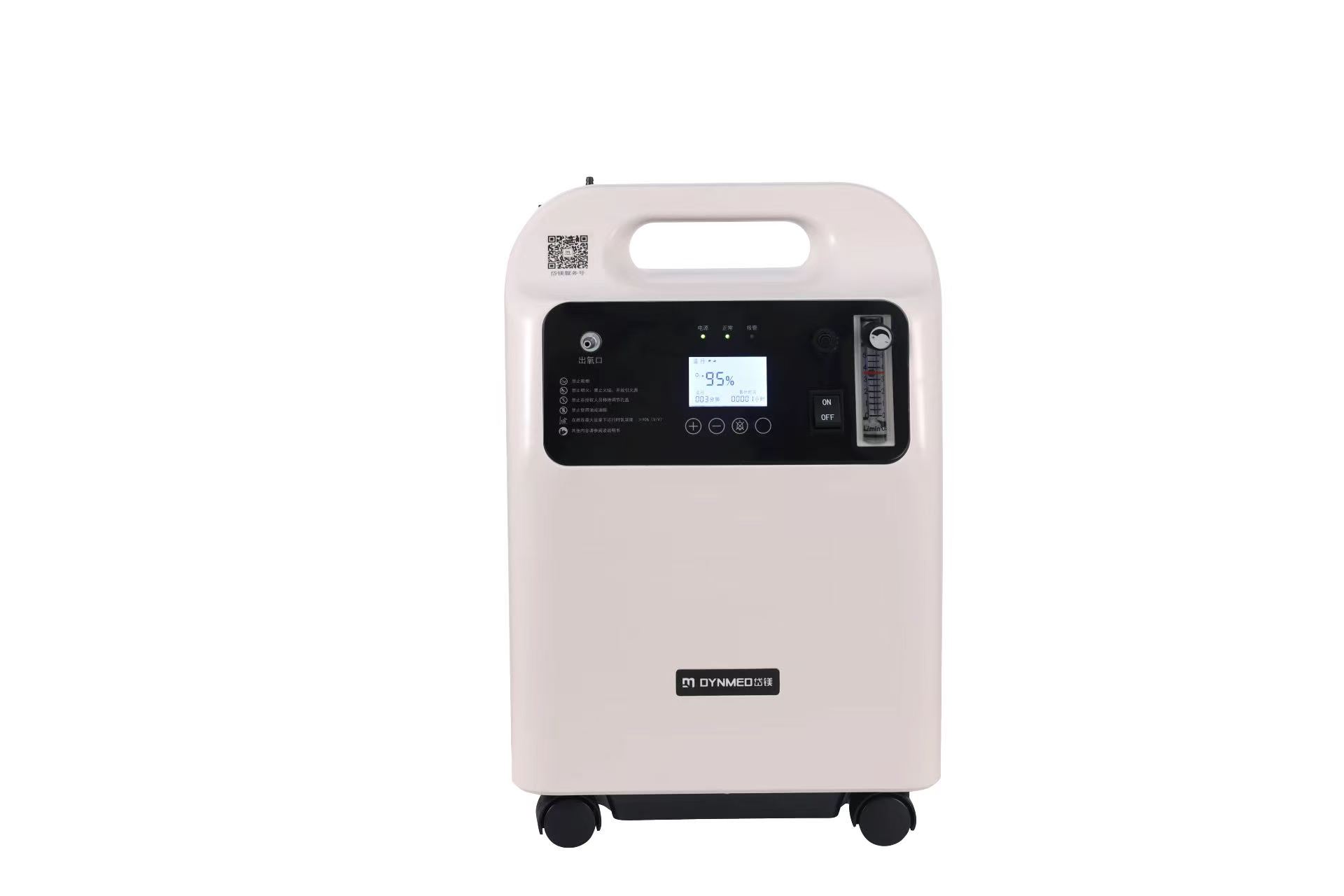
Altitude is the bigger of the two. At higher elevations the partial pressure of oxygen in the air is lower, and the sieve has to do more work to push purity up to 93% +/- 3%. A device rated to 2000 m will typically lose several percentage points of purity at 3000 m, and the published spec usually stops at the rated altitude for a reason. Buyers for high-altitude markets (Andean regions, high-altitude cities in East Africa, Central Asia, the Tibetan plateau, mountain clinics) should ask for the altitude-derating curve from the test report rather than trust the headline 5L or 10L figure.
Ambient temperature matters because the compressor and the sieve both work less efficiently at the edges of their temperature range. In a hot ward, the compressor’s duty cycle shortens, the sieve runs warmer, and purity drifts down at the high end of the flow range. In a cold room, condensation and sieve bed behaviour can be a problem. The 5-40 degC operating range on the artwork is the manufacturer’s stated envelope; the test report should confirm that the device meets 93% +/- 3% across the full flow range within that envelope.
4. Alarms, sieves, and what keeps the device safe over years of use
An oxygen concentrator is a continuous-duty device. In a home-care setting it runs for hours at a time, often every day, for years. Two engineering subsystems determine whether the device stays within its published performance over that lifetime: the alarm system and the sieve bed.
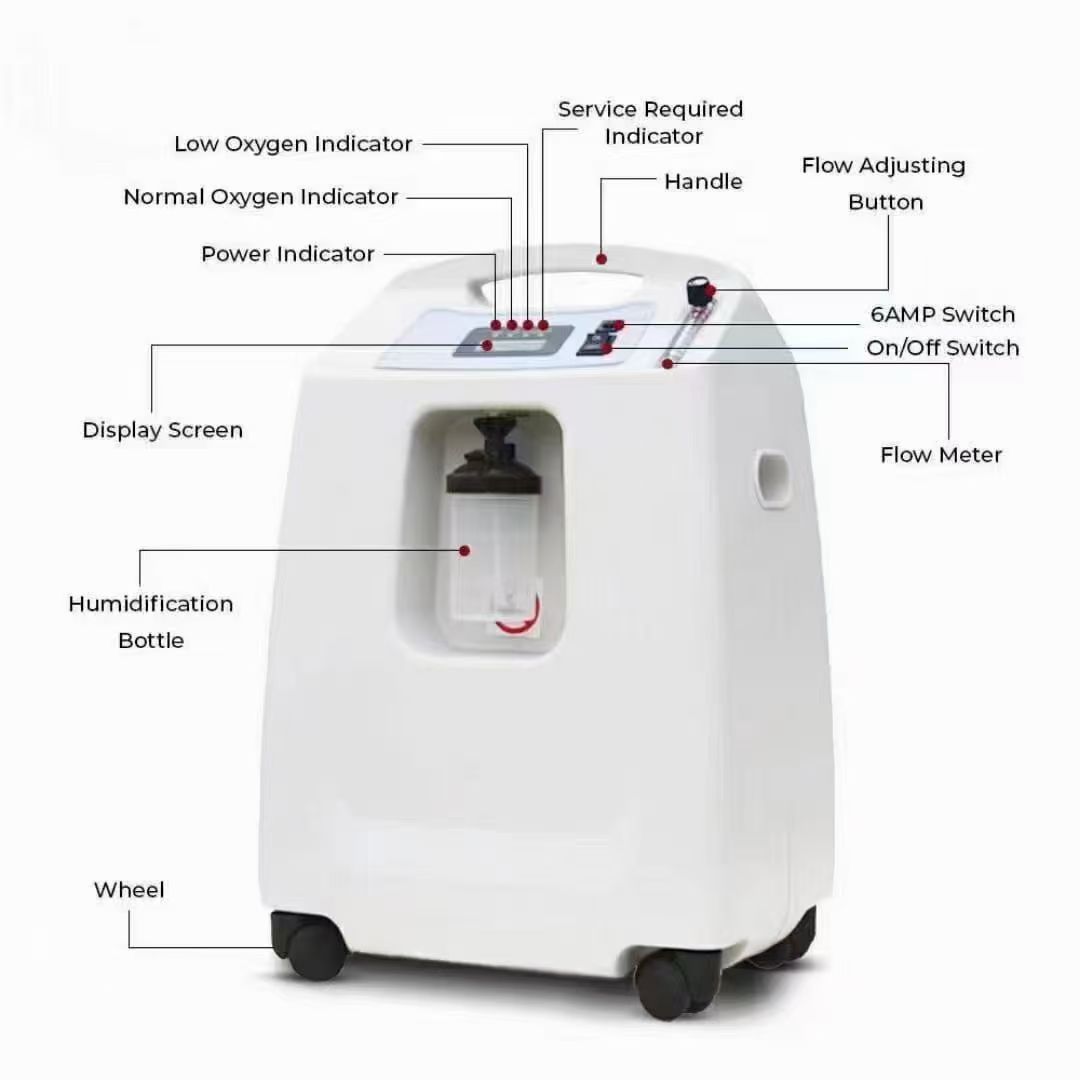
The alarms a buyer should look for are the four the artwork calls out: low oxygen purity, high / low pressure, compressor failure, and power failure. Some platforms add an oxygen-concentration alarm that triggers at a configurable threshold, and a service-required indicator that tells the user when the sieve or the compressor is approaching end-of-life. These alarms are tested under IEC 60601-1-8, which sets the audible level, the colour coding, and the priority of each signal. A device with the right alarm complement is a device that fails loudly and clearly; a device without them fails quietly, and the patient is the last to know.
The sieve bed is the consumable at the heart of the device. A synthetic-zeolite sieve adsorbs nitrogen efficiently for a finite number of cycles, and after a few thousand hours of operation its performance starts to drift downward. Most OEM documentation quotes a sieve lifetime in hours – typically 10,000 to 20,000 hours, with the exact figure depending on the model and the operating environment. Buyers should treat sieve replacement as a real line item: it is a service interval, a spare-parts cost, and a regulatory question (because replacing the sieve can be a service event that has to be tracked under ISO 13485 and the destination market’s post-market surveillance rules). A supplier who can quote sieve lifetime, supply replacement sieves, and document the replacement procedure is a supplier who understands the device as a system, not as a box on a pallet.
5. From 5L to 10L: choosing the right platform
A B2B buyer is rarely choosing a single model. More often, they are building a range – a 5L for home and travel, an 8L or 10L for clinics, oxygen bars, and heavier home therapy. The supplied artwork shows a second platform, a “PLUS Series” available in 8 LPM (models PLUS-8A, 8PM, 8PH, 8PN) and 10 LPM (models PLUS-10A, 10PM, 10PH, 10PN). The higher flow comes with a larger sieve, a more powerful compressor (600 W for 8 LPM, 720 W for 10 LPM), and a higher noise floor (42 dB(A) and 50 dB(A) respectively), but the operating envelope – 5-40 degC, 93% +/- 3% purity, Class II Type B equipment – is the same family.
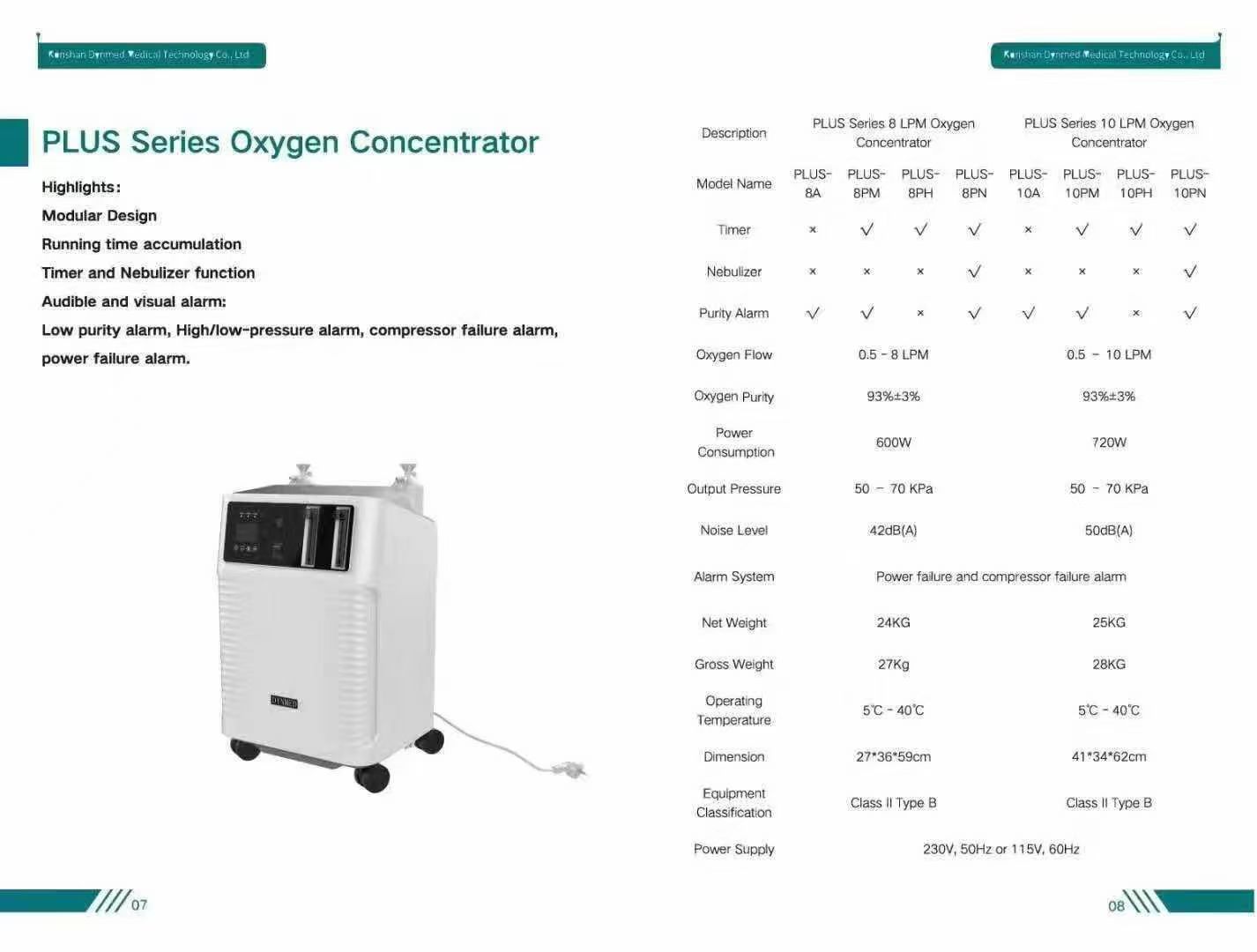
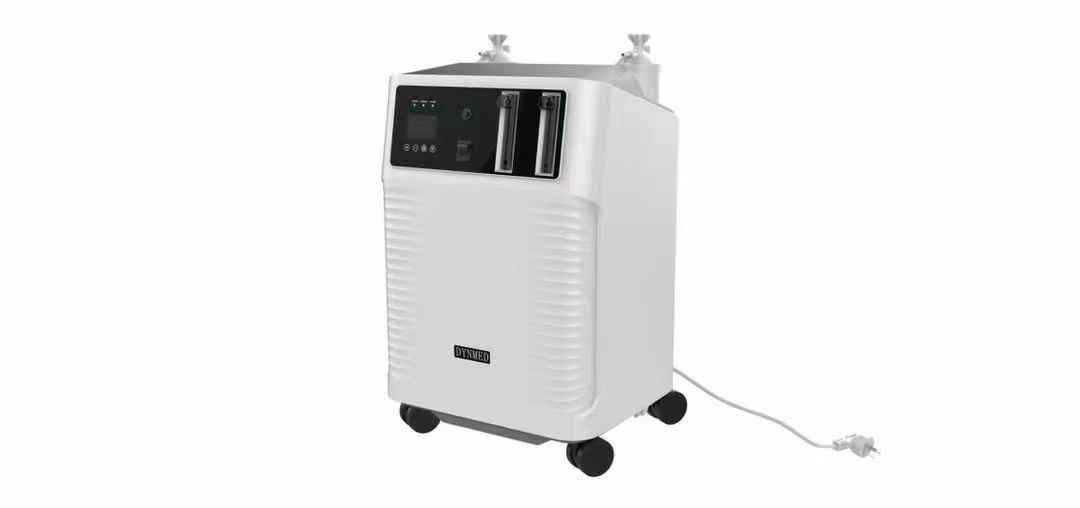
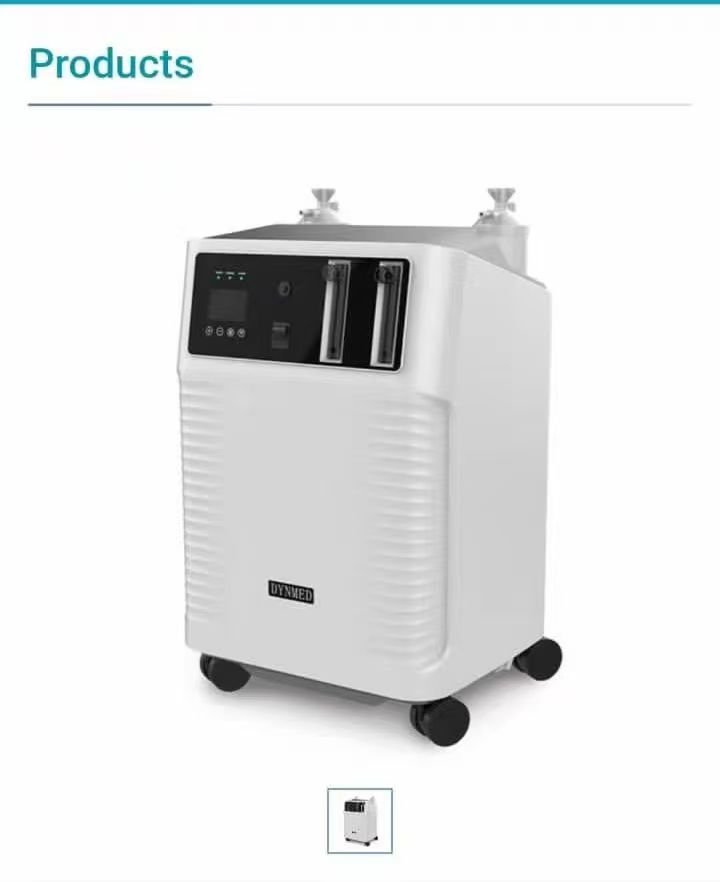
The choice between a 5L, an 8L, and a 10L is not “more is better”. It is about matching the platform to the prescription and the setting. A home-care buyer serving elderly patients on 1-3 LPM continuous flow does not need 10 LPM; a clinic running two patients simultaneously at 5 LPM each does. The right sizing also affects logistics: a 5L device is 14-16 kg net, a 10L device is around 25 kg net, and the carton dimensions, freight, and storage footprint follow the weight curve. A range that shares the same housing language, the same IFU structure, and the same accessory bundle is easier to train, easier to support, and easier to private-label than three unrelated models.
6. Equipment classification and what “Class II, Type BF” means
The 5L artwork lists “Equip. Classification and Type: Class II, Type BF”, and the higher-platform artwork lists “Class II Type B”. Both come from IEC 60601-1, the international standard for the basic safety and essential performance of medical electrical equipment, and both refer to the protection against electric shock, not to the regulatory class under the destination market’s medical-device rules.
Class II refers to the device’s construction: it is double-insulated, so it does not rely on a protective earth connection for safety. Type BF and Type B refer to the applied parts (the patient-contacting parts). Type B applied parts have an acceptable level of protection against electric shock, particularly regarding patient leakage current; Type BF is a higher level of protection, typically used for devices that contact the patient indirectly through a cannula or mask circuit and that have a floating (F-type) applied part. For a concentrator, the type designation determines what leakage-current limits the device has been tested to and what the patient circuit is allowed to look like.
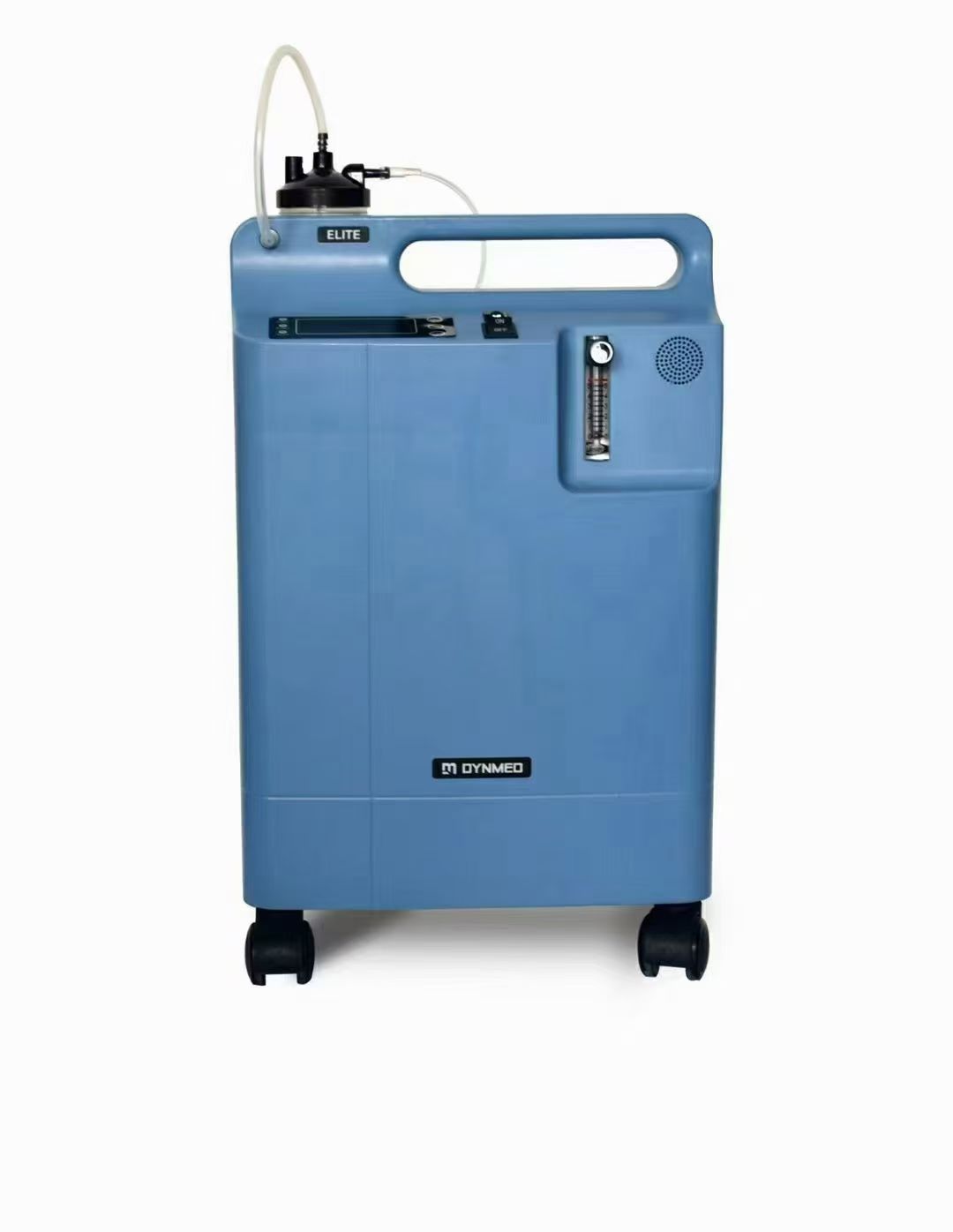
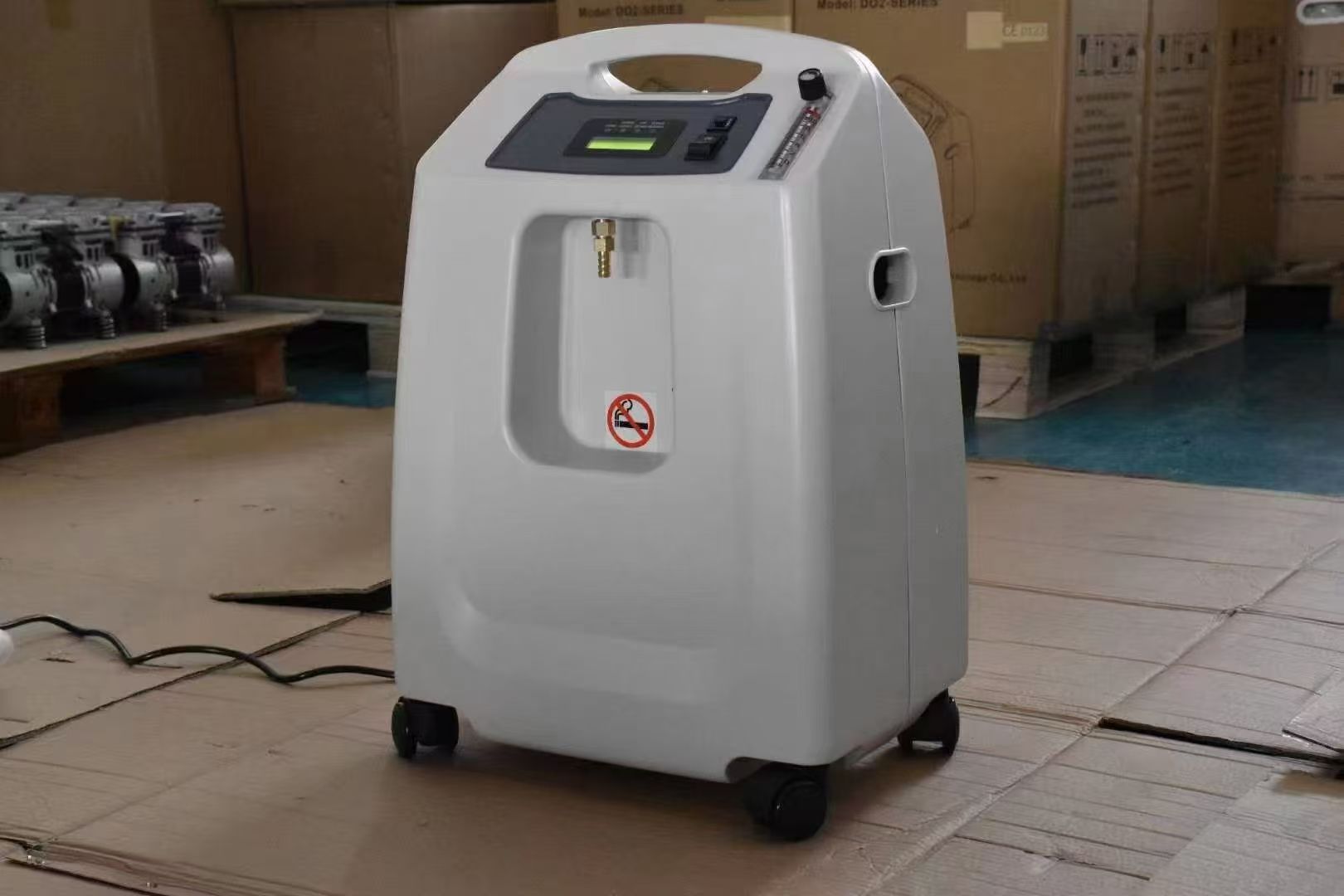
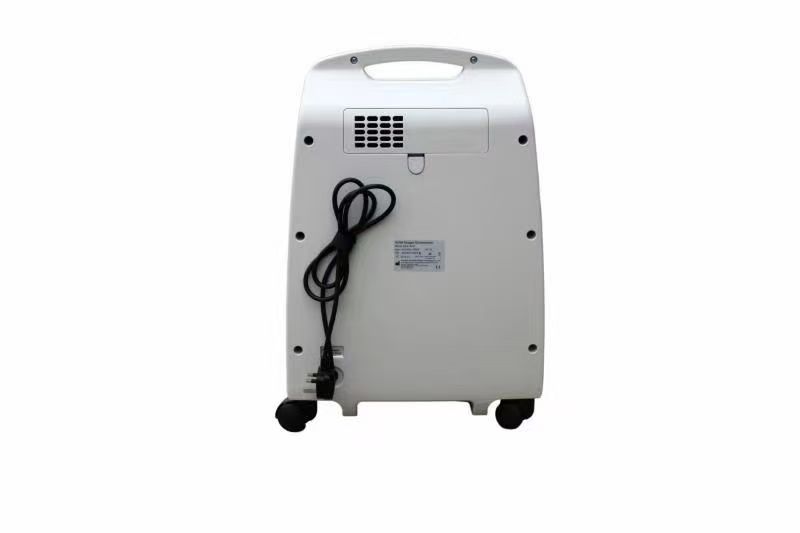
Two practical points follow. The first is that the IEC 60601-1 classification and the destination market’s medical-device class are two different sets of rules. IEC 60601-1 is the design-and-test standard; the medical-device class is the regulatory classification under the EU MDR, the US FDA, or the equivalent. A device can be Class II, Type BF under IEC 60601-1 and simultaneously be Class IIa under the EU MDR, or Class II under 21 CFR 868.5440 in the United States. Buyers should ask for both sets of evidence: the IEC test report (60601-1, 60601-1-2, 60601-1-8) and the regulatory approval for the destination market.
7. Regulatory pathways: ISO 80601-2-69, EU MDR, US FDA
An oxygen concentrator is a medical device. Which regulatory pathway it follows depends on the destination market, and a responsible supplier will be transparent about which markets the model is approved for.
ISO 80601-2-69 is the international particular standard for oxygen concentrator equipment. It supplements IEC 60601-1 with the specific performance, alarm, and labelling requirements that a concentrator must meet. The test report against this standard is the engineering baseline for the device: it covers output purity at each flow setting, accuracy of the flow meter, alarm thresholds, sieve performance, and the labelling content. A supplier that can produce an ISO 80601-2-69 test report for the exact model is a supplier whose performance is characterised in writing.
In the European Union, oxygen concentrators are medical devices classified as Class IIa under Regulation (EU) 2017/745, the Medical Device Regulation (MDR). Class IIa requires the involvement of a notified body for the conformity assessment, and the technical documentation must demonstrate compliance with the relevant harmonised standards, including IEC 60601-1, IEC 60601-1-2, IEC 60601-1-8, and ISO 80601-2-69. The product must carry the CE marking accompanied by the identification number of the notified body, and the manufacturer must operate a quality management system – usually ISO 13485 – covering design, production, and post-market surveillance. The EU Declaration of Conformity and the technical file should be available to the buyer on request.
In the United States, oxygen concentrators intended for medical use are regulated as portable oxygen generators under 21 CFR 868.5440, product code CAW, Class II. The typical pathway is a 510(k) premarket notification demonstrating substantial equivalence to a predicate device, with performance data per ISO 80601-2-69 or equivalent, electrical safety testing per IEC 60601-1, electromagnetic compatibility testing per IEC 60601-1-2, and alarm testing per IEC 60601-1-8. The 510(k) summary and the 510(k) clearance letter should be available to the buyer.
Other markets have their own systems. The United Kingdom requires UKCA marking for the GB market and accepts CE-marked products under transitional arrangements. Health Canada licenses medical devices through the Medical Device Licence process. Australia’s TGA regulates oxygen concentrators as medical devices, with the relevant inclusion in the Australian Register of Therapeutic Goods. China, Japan, and other major markets have their own registration systems. Buyers should confirm the exact destination market and ask for the corresponding approvals before committing to a listing.
A separate but important reference is the pharmacopoeial standard. In the United States, USP publishes a monograph for “Oxygen 93 percent” defining the purity and contaminant limits for oxygen produced by a concentrator for medical use. In Europe, the European Pharmacopoeia publishes the equivalent “Oxygen (93 per cent)” monograph. The device’s labelling should state that the output meets the applicable pharmacopoeia, and the test report should cover the contaminant limits (carbon monoxide, carbon dioxide, NO/NO2, etc.) that the pharmacopoeia sets.
8. The documentation trail buyers should request
Because so much of a concentrator’s value is invisible, the paperwork is part of the product. A reliable supplier can assemble a documentation trail before the first order rather than after a complaint, and that trail is the fastest way to compare suppliers who otherwise look identical.
At minimum, expect the test report for the exact model, naming ISO 80601-2-69 as the particular standard and IEC 60601-1 as the general standard, and covering purity at each flow setting, flow accuracy, alarm coverage, and sieve performance; the electrical safety test report per IEC 60601-1; the electromagnetic compatibility test report per IEC 60601-1-2; the alarm-system test report per IEC 60601-1-8; the regulatory documentation for the destination market (EU Declaration of Conformity and notified body certificate, 510(k) clearance letter, UKCA, Health Canada MDL, TGA ARTG, as applicable); the labelling and Instructions for Use; the sieve-bed replacement procedure; the bill of materials for the exact configuration being supplied; and an ISO 13485 certificate for the manufacturing site. Ask specifically whether the certificate covers the current production configuration, since a certificate for an earlier version of the product does not automatically cover a redesign.
Then close the loop with a sample. The sample should match the documented model, and the production units should match the sample. Buyers who compare the approved sample against the first commercial shipment – in build, accessories, packaging, and labelling – catch more problems than buyers who trust a certificate alone.
9. OEM/ODM and private label
For distributors and brands that want their own identity on the shelf, OEM and private-label capability is the difference between reselling a commodity and building an owned product line. The scope of customisation is where suppliers separate, and it is worth testing that scope early rather than discovering its limits after a launch.
Typical private-label work covers logo printing on the device housing and the retail packaging, custom artwork and retail cartons, colour options for the housing, language versions of the user instructions, accessory choices (nasal cannula, mask, humidifier bottle, intake filter, sieve replacement kit), and country-specific power cords and labelling. ODM work goes further, into adjustments of the product itself – the user interface, the alarm tone, the flow-meter range, the sieve bed and compressor sourcing – and is best supported by a manufacturer that controls its own tooling and production rather than reselling another factory’s output.
Two questions reveal a great deal about a supplier’s real capability. The first is artwork control: how is your logo approved and locked, and how is a misprint prevented from reaching the whole production run? The second is change control: what happens to your approval when the supplier changes a sieve supplier, a compressor supplier, or a firmware version? A capable partner welcomes these questions, because the answers are what keep a branded order consistent from the first shipment to the tenth.
10. MOQ, pricing, packaging, and logistics
Minimum order quantities, packaging, and logistics are where a supplier’s capabilities become concrete. A low MOQ is convenient, but if it comes with a different accessory bundle, a different packaging configuration, or a relaxed quality control, the saving is illusory. Try to understand what the MOQ corresponds to – a full production batch, a tooling run, or a shared order – and the answer will tell you how stable the specification will be.
Packaging is where compliance and commerce meet. The retail packaging must carry the marking that the destination market requires, including the regulatory marks (CE, UKCA, FDA clearance reference, etc.) and the labelling content that the user instructions rely on. The carton configuration affects both unit price and freight: a 5L device with a 44 x 34 x 65 cm carton and a 16.5 kg gross weight, or a 10L device with a larger carton and a 28 kg gross weight, both feed into the landed cost. Buyers who compare unit price without comparing packaging and accessory bundle are comparing different products.
On the logistics side, oxygen concentrators are bulky relative to their unit value, so the carton dimensions, the pallet configuration, and the road versus air choice all matter. A destination in a remote region may have to balance 5L devices shipped by sea against 10L devices shipped by air. The supplier who can advise on this trade is a more useful partner than one who simply quotes a per-unit ex-works price.
Common pitfalls buyers should avoid
- Buying on flow rating alone. The “5L” or “10L” number is a maximum; purity drops as flow rises, and the published spec usually applies within a tight operating envelope. Compare purity across the full flow range, not at one setting.
- Ignoring altitude. A device rated to 2000 m may not deliver 93% +/- 3% at 3000 m. For high-altitude markets, ask for the altitude-derating curve.
- Trusting “medical grade” without the certificate. The phrase is not a regulatory class; ask which market the device is approved for and request the corresponding approval.
- Underestimating sieve replacement cost. The sieve is a consumable, and sieve lifetime determines the device’s true cost of ownership. Confirm sieve lifetime, replacement procedure, and spare-parts pricing in writing.
- Comparing accessorie bundles incompletely. One supplier’s “5L oxygen concentrator” and another’s may differ in cannula, humidifier bottle, intake filter, IFU language, and packaging. Compare like with like.
- Skipping the sample-to-production check. The sample proves intent; only the production audit and the first commercial shipment prove consistency.
- Assuming a CE marking or a 510(k) clearance transfers to every market. They do not. The destination market’s rules apply.
Conclusion
An oxygen concentrator is a continuous-duty medical device sold into a regulated market, and the suppliers worth partnering with are the ones who can show the test report for the exact model – per ISO 80601-2-69 and the destination market’s pathway – explain the trade between flow, purity, and altitude, understand which sieve bed, which compressor, and which alarm complement the device carries, and demonstrate that production units match the approved sample. Everything else, including the price, is easier to negotiate once those three pillars are in place.
B2B buyers evaluating an oxygen concentrator programme are welcome to contact us with their destination market, intended application (home / clinic / portable), preferred flow platform (5L or 8/10L PLUS Series), and estimated volume. We can share model specifications, available test documentation, packaging and private-label options, and sample arrangements, so that the decision is made on evidence rather than on a flow rating.
Frequently Asked Questions
What is the difference between a 5L and a 10L oxygen concentrator?
The number is a maximum flow rating at which the device can deliver its published purity. A 5L device is typically sized for home and lighter clinical use at 0.5-5 LPM; an 8L or 10L device is sized for higher-flow therapy or for running two patients from one device. The trade is that higher flow requires a larger sieve, a more powerful compressor, and more electrical power, and the device is usually heavier and louder.
What does 93% +/- 3% oxygen purity mean in practice?
It is the pharmacopoeial standard for medical oxygen produced by a concentrator, expressed in both the United States Pharmacopeia monograph for “Oxygen 93 percent” and the European Pharmacopoeia monograph for “Oxygen (93 per cent)”. A device that meets the standard delivers 90-96% oxygen concentration at its rated flow, and the test report should confirm that this is maintained across the full flow range within the device’s stated operating envelope.
Does an oxygen concentrator need to be calibrated?
The oxygen sensor that drives the purity alarm and the purity display is a consumable, with a typical service life in the low thousands of hours. Replacement intervals are stated in the IFU and form part of the device’s preventive-maintenance schedule. Buyers should confirm the sensor’s lifetime, the replacement procedure, and the spare-parts supply with the manufacturer.
Can an oxygen concentrator be used at high altitude?
Within the device’s stated operating altitude (the supplied 5L models are rated to 2000 m / 6561 ft), purity is maintained across the rated flow range. Above that altitude, purity drops, and a high-altitude variant or a different device may be required. Ask the supplier for the altitude-derating curve from the test report.
How long does the sieve bed last?
A typical PSA sieve bed lasts 10,000-20,000 operating hours, depending on the model, the environment, and the flow duty cycle. Replacement is a service event, not a daily task, and the supplier should document the replacement procedure, supply the replacement sieve, and quote the spare-parts price.
What is the difference between a 510(k) clearance and a CE marking?
Both are destination-market approvals. In the United States, a 510(k) clearance under 21 CFR 868.5440 is the FDA’s premarket notification pathway for portable oxygen generators. In the European Union, a CE marking with the notified body number, issued under the EU Medical Device Regulation (Class IIa), is the equivalent. They are not interchangeable; the destination market determines which one applies.
Where can I find a reliable oxygen concentrator supplier?
Request the model’s test report per ISO 80601-2-69, the regulatory documentation for the destination market, the IFU, the sieve replacement procedure, and a sample of the exact configuration you intend to buy, and compare the delivered product against the documented specification before placing a larger order. A supplier who can provide all of these is easier to trust than one who cannot.